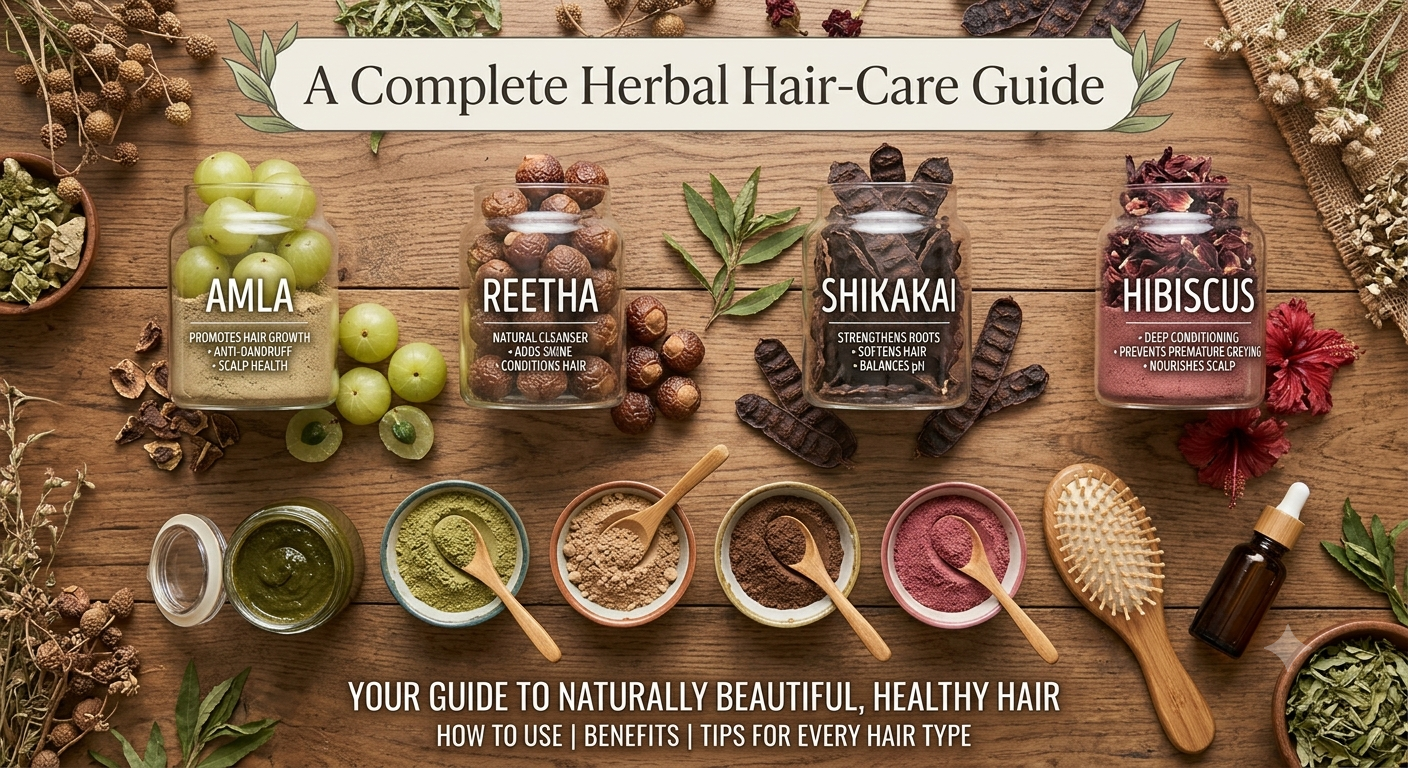
Traditional Indian hair care includes a variety of plant-based ingredients that have been used in homemade preparations for generations. Among the popular choices are amla, reetha, shikakai and hibiscus.
Each ingredient has a different role in traditional hair care. Amla is commonly included in herbal hair masks, reetha is associated with cleansing, shikakai is traditionally used for washing hair, and hibiscus is found in many homemade hair-care preparations.
But how do these ingredients differ? Can you use them together? And how can you incorporate them into a practical hair-care routine?
In this guide, we will explore the traditional uses of all four ingredients, explain simple preparation methods and share tips for using herbal powders responsibly.
1. What Is Amla Powder?
Amla, also known as Indian gooseberry, is a fruit traditionally used in Indian food, wellness practices and hair-care preparations. Amla powder is made from dried amla fruit.
In traditional hair care, amla powder is commonly mixed with water to create a paste or combined with other suitable herbal ingredients.
Traditional uses of amla powder
- Used in homemade herbal hair masks.
- Included in traditional hair-care preparations.
- Combined with other suitable plant-based powders.
- Used by people who prefer traditional herbal ingredients in their personal-care routines.
How to use amla powder
Ingredients:
- 2 tablespoons amla powder
- Water as needed
Method:
- Place the powder in a clean bowl.
- Add water gradually while mixing.
- Continue until you have a smooth paste.
- Follow the product directions for application and rinsing.
Prepare only the quantity needed for one use. Check that the product is suitable for your intended application, and test it on a small area of skin before wider use.
For a more detailed explanation, read our earlier guide:
Amla Powder for Hair: Uses, Benefits & How to Use
2. What Is Reetha Powder?
Reetha, commonly known as soapnut, comes from fruits of plants in the Sapindus genus. These fruits contain naturally occurring compounds called saponins, which contribute to their cleansing properties.
Reetha powder is traditionally used in hair-cleansing preparations. Because it can irritate the eyes and may not suit every scalp, it should be handled carefully.
Traditional uses of reetha powder
- Used in traditional hair-cleansing preparations.
- Combined with other suitable cleansing ingredients.
- Chosen by people interested in plant-based alternatives for hair washing.
How to use reetha powder
The method depends on the product formulation. If the product directions permit mixing with water:
- Measure the recommended amount of reetha powder.
- Add water according to the label directions.
- Mix thoroughly.
- Apply only as directed and rinse carefully.
Important: Keep reetha preparations away from the eyes. If the product enters your eyes, rinse immediately with plenty of clean water.
3. What Is Shikakai Powder?
Shikakai is a plant traditionally associated with hair cleansing in India. It is commonly identified with Acacia concinna and is widely used in traditional hair-washing preparations.
Shikakai powder is often mixed with water to create a paste or used in other preparations according to the manufacturer's directions.
Traditional uses of shikakai powder
- Used in traditional hair-cleansing routines.
- Combined with reetha in some hair-washing preparations.
- Included in plant-based hair-care practices.
How to use shikakai powder
- Read the instructions on your product.
- Measure the recommended quantity.
- Add water gradually if the instructions call for a paste.
- Apply as directed and rinse thoroughly.
Avoid contact with your eyes and stop using the preparation if you experience irritation.
For a closer look at how reetha and shikakai differ, read:
Reetha vs Shikakai: Differences, Uses & Hair Care
4. What Is Hibiscus Powder?
Hibiscus is a flowering plant used in traditional beauty preparations. Hibiscus powder is commonly incorporated into homemade hair masks and other plant-based hair-care mixtures.
Its suitability depends on the specific product and how your hair and scalp respond.
Traditional uses of hibiscus powder
- Included in homemade herbal hair masks.
- Combined with other suitable powders.
- Used in traditional hair-care routines.
How to use hibiscus powder
Ingredients:
- 2 tablespoons hibiscus powder
- Water as needed
Method:
- Add the powder to a clean bowl.
- Slowly add water while mixing.
- Create a smooth paste.
- Follow the product directions for application and rinsing.
Start with a simple preparation rather than mixing several new ingredients together at once.
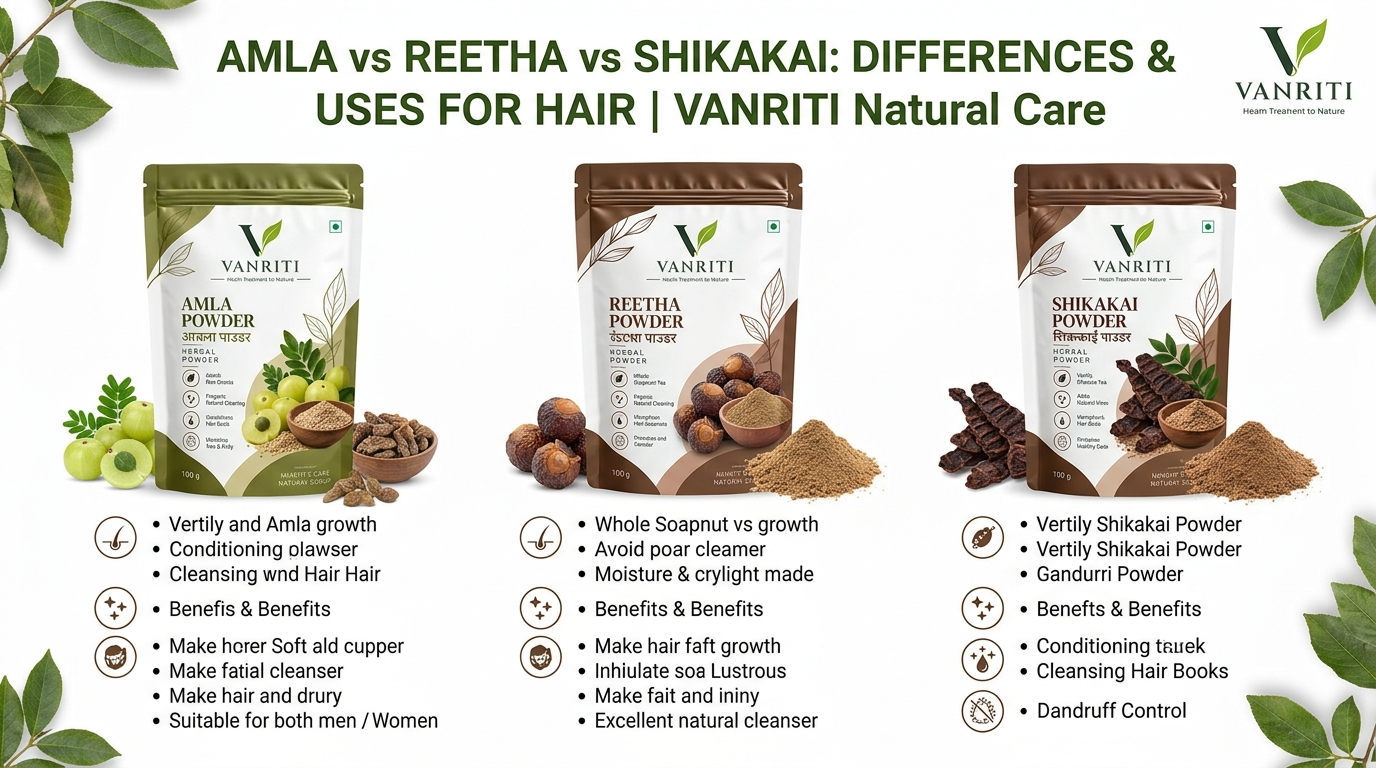
Amla vs Reetha vs Shikakai vs Hibiscus: What Is the Difference?
Although these four ingredients are used in traditional hair care, they are not interchangeable.
| Ingredient | Traditional hair-care role | Common preparation |
| Amla | Ingredient in herbal hair-care preparations | Powder mixed with water |
| Reetha | Hair cleansing | Preparation according to product directions |
| Shikakai | Traditional hair cleansing | Powder mixed with water, if directed |
| Hibiscus | Ingredient in homemade hair masks | Powder mixed with water |
The key distinction is that reetha and shikakai are primarily associated with traditional cleansing, while amla and hibiscus are commonly included in hair-care mask preparations.
This is a general guide rather than a guarantee of results. Actual suitability depends on the product formulation and individual response.
Can You Use Amla, Reetha, Shikakai and Hibiscus Together?
Some people prefer combining several traditional ingredients in one hair-care routine. However, you do not need to use all four powders in a single preparation.
A more practical approach is to choose ingredients based on their intended purpose.
Option 1: Amla and hibiscus hair mask
Amla and hibiscus can be combined in a homemade paste if both products are suitable for that use.
Ingredients:
- 1 tablespoon amla powder
- 1 tablespoon hibiscus powder
- Water as needed
Method:
- Mix both powders in a clean bowl.
- Add water gradually.
- Stir until the mixture becomes a smooth paste.
- Follow the directions for both products when applying and rinsing.
Start with a small batch and test the preparation before wider use.
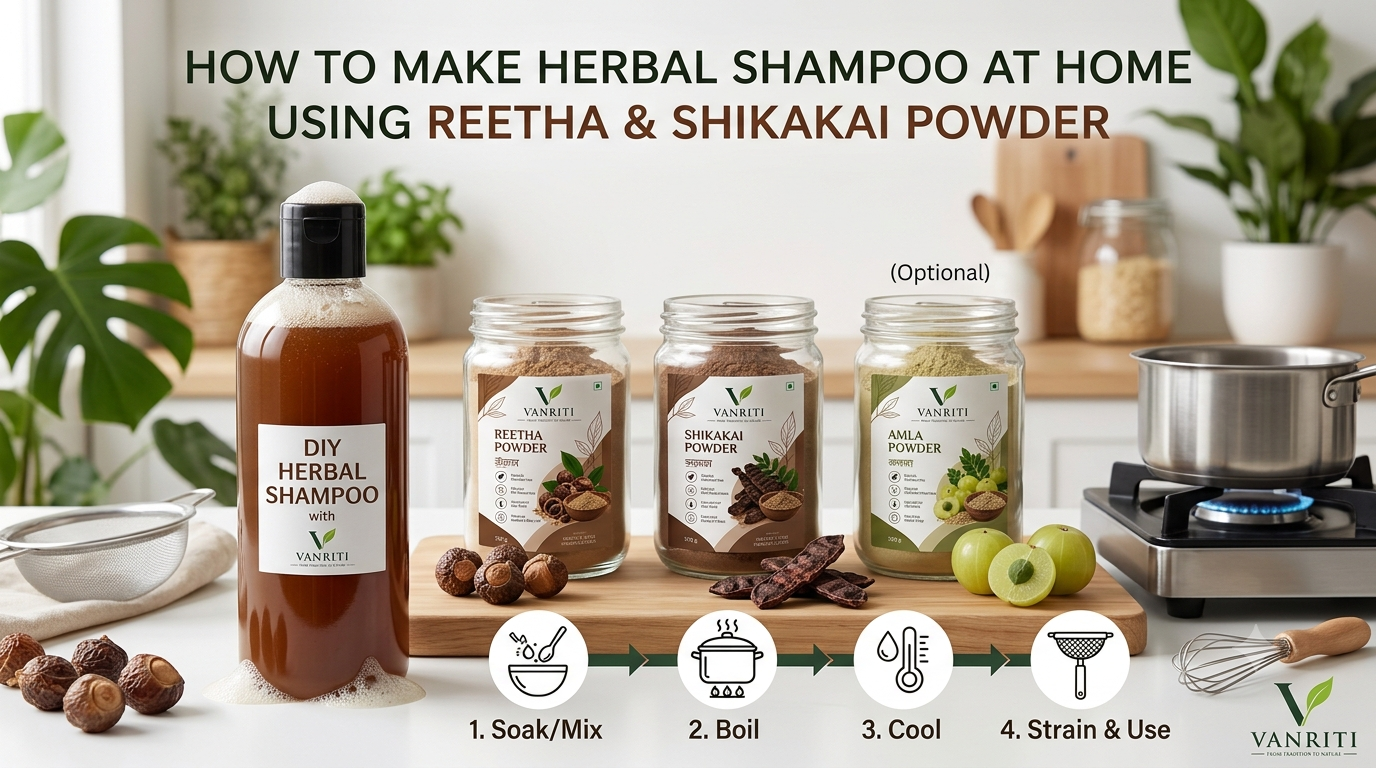
Option 2: Reetha and shikakai cleansing preparation
Reetha and shikakai are traditionally combined in some hair-cleansing preparations.
Method:
- Check the instructions for both powders.
- Combine them only if the directions permit it.
- Add water as instructed.
- Use the mixture for cleansing as directed and rinse thoroughly.
Avoid contact with the eyes, and discontinue use if irritation develops.
Should you mix all four powders?
You may encounter recipes that combine all four ingredients, but using more powders does not automatically make a preparation better. Each ingredient has different properties, and combining them can make it harder to identify the cause of irritation.
For beginners, separate preparations are often easier to manage.
VANRITI Amla, Reetha, Shikakai and Hibiscus Combo
How to Build a Simple Herbal Hair-Care Routine
A routine does not need to involve many products. Start with your basic hair-care needs and choose ingredients accordingly.
Step 1: Choose a suitable cleansing method
Select a hair cleanser that suits your hair and scalp. If you want to try reetha or shikakai, follow the product directions and introduce the preparation cautiously.
Step 2: Decide whether you want to use a hair mask
If you wish to explore a traditional hair mask, consider a simple amla or hibiscus preparation. Make sure the powder is intended for your planned use.
Step 3: Introduce one new preparation at a time
Using several unfamiliar ingredients simultaneously makes it difficult to identify which one caused a reaction. Introduce products gradually and monitor your response.
Step 4: Rinse thoroughly
Remove all visible residue and stop using a preparation if you experience persistent dryness, itching or discomfort.
Step 5: Adjust your routine
There is no single schedule suitable for everyone. Follow product directions and adjust your routine according to how your hair and scalp respond.
For a more detailed routine, explore our related article:
A Weekly Herbal Hair-Care Routine Using Traditional Powders
Tips for Choosing Quality Herbal Powders
When shopping for herbal powders, pay attention to more than just the ingredient name.
1. Check the ingredient list.
Choose products that clearly identify their ingredients.
2. Confirm the intended use.
Make sure the product is intended for hair care and follow the directions provided.
3. Look at packaging and storage instructions.
Prefer properly sealed packaging and store the powder as directed to protect it from moisture and contamination.
4. Avoid unsupported claims.
Be cautious of products promising guaranteed hair growth, an immediate end to hair fall or other dramatic results.
5. Follow usage instructions.
Natural ingredients can still cause irritation. Always follow the product label and perform a patch test before first use.
Safety Precautions When Using Herbal Hair Powders
Keep these points in mind when preparing herbal powders at home:
- Use clean bowls and utensils.
- Prepare only the quantity needed for one application.
- Avoid storing leftover water-based mixtures.
- Keep all preparations away from your eyes.
- Do not apply products to broken or irritated skin.
- Test new preparations on a small area of skin first.
- Stop using a product if you experience burning, itching, redness or swelling.
- Consult a qualified healthcare professional for persistent scalp problems or unexplained hair loss.
A patch test can reduce uncertainty but cannot guarantee that a product will never cause a reaction.
For more guidance, read:
How to Use Herbal Powders Safely for Hair and Skin
Frequently Asked Questions
1. Which is better for hair: amla, reetha, shikakai or hibiscus?
There is no single best ingredient for everyone. Reetha and shikakai are traditionally associated with cleansing, while amla and hibiscus are commonly used in hair-care preparations. Choose according to your intended use and the product instructions.
2. Can I use reetha and shikakai together?
They are traditionally combined in some hair-cleansing preparations. Follow the instructions for both products, avoid eye contact and stop using the mixture if irritation occurs.
3. Can I mix amla and hibiscus powder?
Yes, they can be combined in a homemade paste if both products are suitable for that use. Start with a small quantity, perform a patch test and follow the directions on both labels.
4. How often should I use herbal hair powders?
Frequency depends on the product, ingredients and your hair and scalp response. Follow the product instructions rather than assuming that daily use is necessary.
5. Can these herbal powders guarantee hair growth?
No. These traditional ingredients cannot guarantee hair growth or prevent hair loss. Persistent or sudden hair shedding should be assessed by a qualified healthcare professional.
6. Can I use these powders on coloured or chemically treated hair?
Suitability varies by product. Some preparations may affect the feel or appearance of treated hair. Check the label, consult your hair-care professional if necessary and test a small, inconspicuous section first.
7. Can I store a mixed herbal hair paste?
It is best to prepare only what you need for one application. Water-based homemade mixtures can become contaminated, so avoid keeping leftovers.
8. Are herbal powders suitable for every scalp type?
No. Individual responses vary, and some ingredients may cause dryness or irritation. Introduce products cautiously and discontinue use if a reaction develops.
Final Thoughts
Amla, reetha, shikakai and hibiscus are well-known ingredients in traditional Indian hair care, but each has a different role.
- Amla: Commonly used in traditional hair-care preparations.
- Reetha: Associated with traditional cleansing.
- Shikakai: Traditionally used for hair washing.
- Hibiscus: Commonly included in homemade hair masks.
You do not need to use every ingredient at once. Choose suitable products, follow their instructions and build a simple routine that works for your needs.
Explore the VANRITI range to find herbal powders for your hair-care routine.