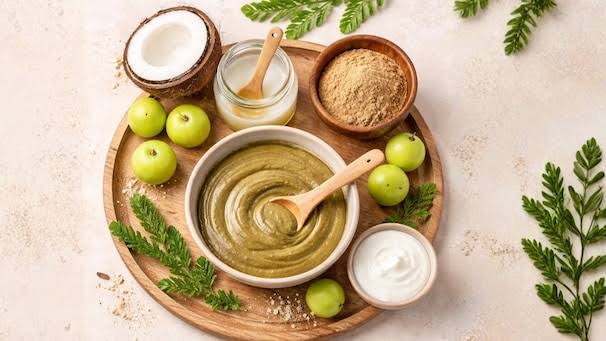
Amla powder is a popular ingredient in traditional Indian hair-care routines. Made from dried Indian gooseberry, it is commonly used in homemade hair masks and other herbal hair-care preparations.
If you prefer traditional botanical ingredients in your personal care routine, amla powder can be an option worth exploring. However, choosing the right preparation, following suitable application practices, and understanding what the ingredient can realistically do are important.
In this guide, we’ll explore what amla powder is, how it is used in hair care, how to prepare a simple hair mask, and what to consider before adding it to your routine.
What Is Amla Powder?
Amla, also known as Indian gooseberry, is a fruit widely used in traditional Indian food, wellness practices, and personal care preparations. Amla powder is made by drying and processing the fruit into a powdered form.
In hair care, amla powder is commonly used as an ingredient in herbal hair masks. It can be prepared with water or other suitable ingredients to create a paste for topical application.
The exact composition, processing method, and intended use can vary between products. Always check the product label to confirm that the powder is intended for your chosen application.
What Are the Uses of Amla Powder for Hair?
Amla powder is traditionally incorporated into hair-care routines in several ways.
1. Preparing a herbal hair mask
One common use is preparing a paste that can be applied to the hair and scalp before rinsing. A hair mask provides a convenient way to incorporate powdered ingredients into a personal care routine.
2. Adding variety to a traditional hair-care routine
Some people prefer herbal powders as an alternative to, or occasional addition to, their usual hair-care products. Whether this suits you depends on your hair type, scalp sensitivity, and the instructions provided with the product.
3. Combining with other herbal powders
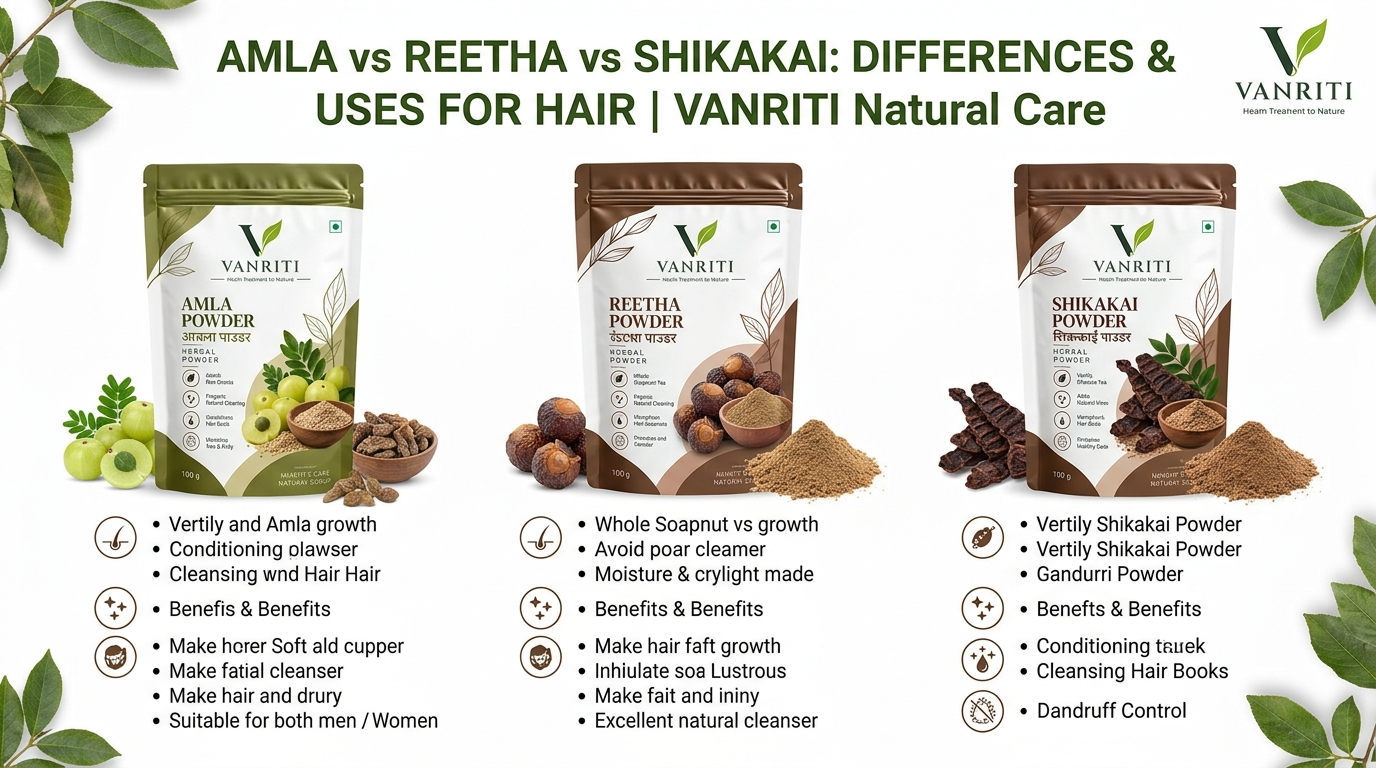
Amla powder is sometimes used alongside other traditional hair-care ingredients, such as bhringraj, reetha, or shikakai. Each ingredient has different properties and intended uses, so combinations should be chosen carefully.
Important: Traditional use does not automatically prove that an ingredient prevents hair loss, stimulates new hair growth, or treats scalp conditions. Avoid expecting medical or guaranteed results from a homemade hair mask.
How to Use Amla Powder for Hair
The best preparation depends on the product instructions and your personal care preferences. A simple rinse-off paste is one option when the powder is labelled for topical use.
What you need
- Amla powder intended for external hair care
- A clean bowl
- A clean spoon
- Water, as needed to prepare a paste
- A towel to protect your clothing
Step-by-step method
Step 1: Measure the powder
Place a small amount of amla powder in a clean bowl. Start with a modest quantity so you do not prepare more than you need.
Step 2: Add water gradually
Add water a little at a time and stir until you obtain a smooth, spreadable paste. Avoid making the mixture too watery or too thick to apply comfortably.
Step 3: Check the mixture
Make sure there are no unwanted particles or contaminants in the preparation. Use the mixture promptly rather than storing a homemade paste for later use.
Step 4: Apply carefully
Apply the paste to the areas specified by the product instructions. Avoid contact with your eyes and do not apply it to broken, irritated, or inflamed skin.
Step 5: Rinse thoroughly
Rinse the hair and scalp thoroughly according to the product directions. Remove any remaining powder so that residue does not accumulate in the hair.
Step 6: Observe how your hair and scalp respond
Stop using the preparation if you experience itching, burning, redness, or discomfort.
Always follow the manufacturer's instructions if they differ from this general preparation method.
Can You Combine Amla Powder with Bhringraj Powder?
Amla and bhringraj are both used in traditional Indian hair-care preparations. Some people choose to combine them in a homemade hair mask.
Before mixing them, check that both products are intended for external hair care and that their manufacturers' instructions allow this type of preparation.
If you try a combination, prepare a small quantity first and patch-test it before wider application. Avoid adding several unfamiliar ingredients at once, as this can make it harder to identify the cause of irritation.
Bhringraj powder for hair care
How to Choose Amla Powder for Hair Care
Not every powder sold under the same ingredient name has the same intended use. Before buying amla powder for your hair-care routine, consider the following points.
Check the intended use
Choose a product whose label clearly identifies its intended application. Do not assume that a food-grade powder is automatically suitable for cosmetic use, or that a cosmetic product is suitable for consumption.
Read the ingredient information
Review the ingredient declaration and any preparation instructions. Avoid assuming that a product is organic, additive-free, or made using a particular process unless its packaging or supporting documentation confirms those details.
Check the packaging
Look for clearly stated net weight, batch details, manufacturer information, and storage instructions where applicable.
Consider convenience
Choose a pack size that suits how frequently you intend to use the product. Store it according to the manufacturer's directions and keep it protected from moisture.
Explore herbal hair-care products
Precautions When Using Amla Powder on Hair
Herbal ingredients can still cause irritation or sensitivity. Follow these precautions when trying a new product.
- Perform a patch test before first use.
- Follow the label's preparation and application directions.
- Avoid contact with the eyes.
- Do not apply to broken or irritated skin.
- Do not leave a preparation on longer than the recommended duration.
- Rinse thoroughly after use.
- Discontinue use if irritation occurs.
- Do not ingest a product unless it is explicitly labelled for food use.
If you have persistent scalp irritation, unusual hair loss, or another ongoing scalp concern, consult a qualified healthcare professional rather than relying solely on homemade hair masks.
Frequently Asked Questions
1. Is amla powder good for hair?
Amla powder is traditionally used in hair-care preparations, particularly homemade masks. Whether it suits your hair depends on the product, preparation, and individual response. Strong claims about hair growth or preventing hair loss require appropriate evidence.
2. How do you use amla powder for hair?
When the product is intended for external hair care, one option is to prepare a paste with water and apply it according to the label. Rinse thoroughly and stop using it if irritation develops.
3. Can I mix amla powder with other herbal powders?
Some herbal powders are used together in traditional preparations. Check each product's intended use and directions before combining them, and patch-test the finished preparation.
4. How often should I use amla powder on my hair?
There is no single frequency suitable for everyone. Follow the manufacturer's instructions and consider your hair and scalp's response. Avoid frequent use if it causes dryness or irritation.
5. Can amla powder stop hair fall?
It should not be presented as a proven treatment for hair loss. Hair shedding can have many causes, and persistent or sudden hair loss should be assessed by a qualified healthcare professional.
6. How should I store amla powder?
Follow the product label. In general, keep powdered products securely sealed and protected from moisture, contamination, and unsuitable storage conditions.
Conclusion
Amla powder is a traditional botanical ingredient that can be incorporated into a hair-care routine when the product is intended for external use. A simple rinse-off mask is one way to explore it, provided you follow the manufacturer's directions and take precautions against irritation.
Choose products with clear ingredient information, prepare small quantities, and pay
attention to how your hair and scalp respond.
If you are exploring traditional botanical ingredients for your routine, you can also learn about other hair-care powders and their intended uses before deciding which products suit your needs.