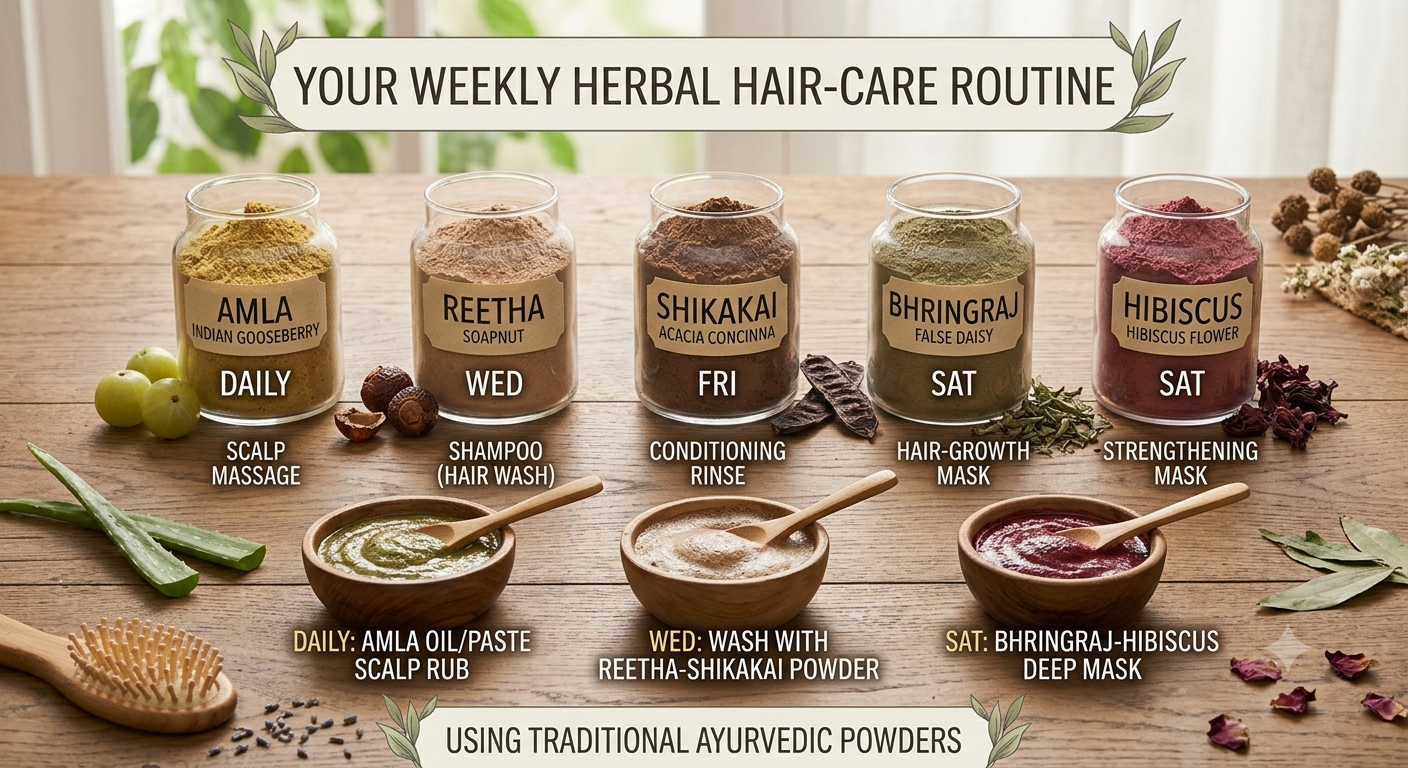
Healthy-looking hair starts with a hair-care routine that suits your hair, scalp and lifestyle. While some people prefer ready-made hair-care products, others enjoy exploring traditional ingredients such as amla, bhringraj, reetha, shikakai and hibiscus.
These ingredients have different traditional uses. Reetha and shikakai are commonly associated with hair cleansing, while amla, bhringraj and hibiscus are often included in homemade hair-care preparations.
But how can you use these powders without making your routine complicated? Should you apply a hair mask every day? And which ingredients should you use together?
In this guide, we will explain how to build a simple weekly herbal hair-care routine, choose suitable powders and use them responsibly.
Why Follow a Weekly Hair-Care Routine?
A regular routine can make it easier to keep your hair clean, manage dryness and reduce unnecessary experimentation with products.
A useful routine does not need to involve many ingredients. The goal is to choose suitable products, use them according to their directions and adjust the routine based on how your hair and scalp respond.
A simple routine may include:
- Cleansing your hair when needed.
- Using a suitable conditioning product if your hair requires it.
- Trying an optional herbal hair mask.
- Avoiding excessive heat and harsh handling.
- Keeping your scalp clean and monitoring irritation.
Herbal powders can be part of this routine, but they are optional. They are not guaranteed treatments for hair loss, dandruff or other scalp conditions.
Understanding the Main Herbal Powders
Before creating a weekly schedule, it helps to understand the traditional uses of each ingredient.
1. Amla Powder
Amla, also known as Indian gooseberry, is commonly used in traditional hair-care preparations.
Common use: Homemade herbal hair masks and other traditional preparations.
How to use: Mix with water to form a paste if the product directions permit.
2. Bhringraj Powder
Bhringraj is associated with traditional Ayurvedic hair care and is used in some homemade hair-care preparations.
Common use: Herbal hair masks and traditional hair-care routines.
How to use: Prepare according to the product instructions, commonly by mixing with water when a paste is appropriate.
3. Reetha Powder
Reetha, also known as soapnut, contains naturally occurring saponins and is traditionally used for cleansing.
Common use: Hair-cleansing preparations.
How to use: Follow the product's instructions carefully and avoid contact with the eyes.
4. Shikakai Powder
Shikakai is traditionally associated with hair washing and is commonly used in plant-based cleansing preparations.
Common use: Traditional hair cleansing, sometimes combined with reetha.
How to use: Prepare and apply according to the product directions.
5. Hibiscus Powder
Hibiscus powder is commonly used in traditional hair-care and homemade hair-mask preparations.
Common use: Herbal hair masks.
How to use: Mix with water if appropriate for the product, and follow its application and rinsing directions.
A Simple Weekly Herbal Hair-Care Schedule
The following schedule is an example, not a requirement. Adjust it to your hair's needs and the directions on your chosen products.
| Day | Hair-care activity | Ingredients to consider |
| Monday | Regular cleansing, if needed | Your usual suitable cleanser |
| Tuesday | Gentle hair handling and routine maintenance | No herbal powder required |
| Wednesday | Optional herbal hair mask | Amla or hibiscus powder |
| Thursday | Check how your hair and scalp respond | No new preparation needed |
| Friday | Cleansing, if needed | Reetha or shikakai preparation, if suitable |
| Saturday | Gentle grooming and conditioning as needed | Your usual suitable hair-care products |
| Sunday | Review your routine and plan the next week | Repeat only products your hair and scalp tolerate |
Important: You do not need to use every herbal powder in one week. If you are new to herbal preparations, begin with one product at a time and avoid introducing several new ingredients together.
Step-by-Step: How to Follow the Routine
Monday: Start With Suitable Cleansing
Begin the week by cleaning your hair when needed. Choose a cleansing product that suits your scalp and hair.
If you want to try traditional cleansing powders, reetha and shikakai are common options. However, homemade preparations can vary in strength and may not suit everyone.
Tips:
- Follow the product's instructions.
- Avoid getting cleansing mixtures into your eyes.
- Rinse thoroughly.
- Stop using a preparation if it causes irritation or excessive dryness.
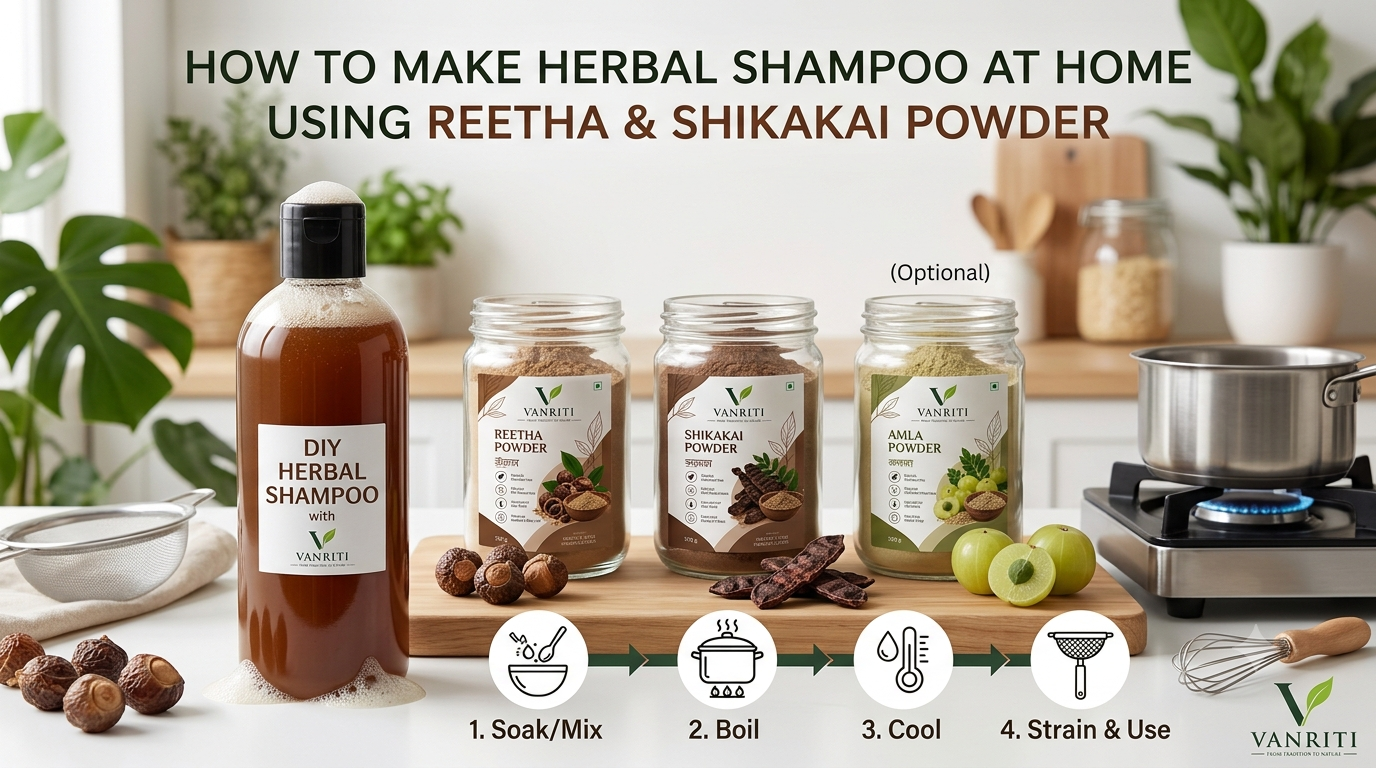
VANRITI Reetha and Shikakai Combo
Wednesday: Try a Simple Herbal Hair Mask
A hair mask is an optional addition to your routine. Amla or hibiscus powder may be used in a homemade preparation if the product directions permit.
Simple Amla Hair Mask
Ingredients:
- 1–2 tablespoons amla powder
- Water as needed
Preparation:
- Add the powder to a clean bowl.
- Gradually add water.
- Mix until a smooth paste forms.
- Prepare only enough for one application.
Application:
Follow the product's instructions for where and how to apply the paste. Avoid contact with the eyes and rinse thoroughly after the recommended application time.
If you have never used the product before, perform a patch test and start cautiously.
Alternative: Hibiscus Hair Mask
If you prefer hibiscus, use the same general preparation approach only if the product directions allow a water-based paste.
Start with one mask rather than applying both recipes on the same day. Using more ingredients does not automatically improve results.
Friday: Cleanse Again Only If Needed
How often you wash your hair depends on your scalp, activity level, hair type and personal preference.
If your hair needs cleansing, you may use a suitable cleanser or a traditional reetha or shikakai preparation according to the product directions.
Avoid treating herbal cleansing powders as automatically gentler than every other cleanser. Some preparations may leave hair feeling dry or rough.
Tips:
- Start with the recommended amount.
- Keep the preparation away from your eyes.
- Rinse thoroughly.
- Use a suitable conditioner if your hair needs extra manageability.
- Discontinue use if irritation develops.
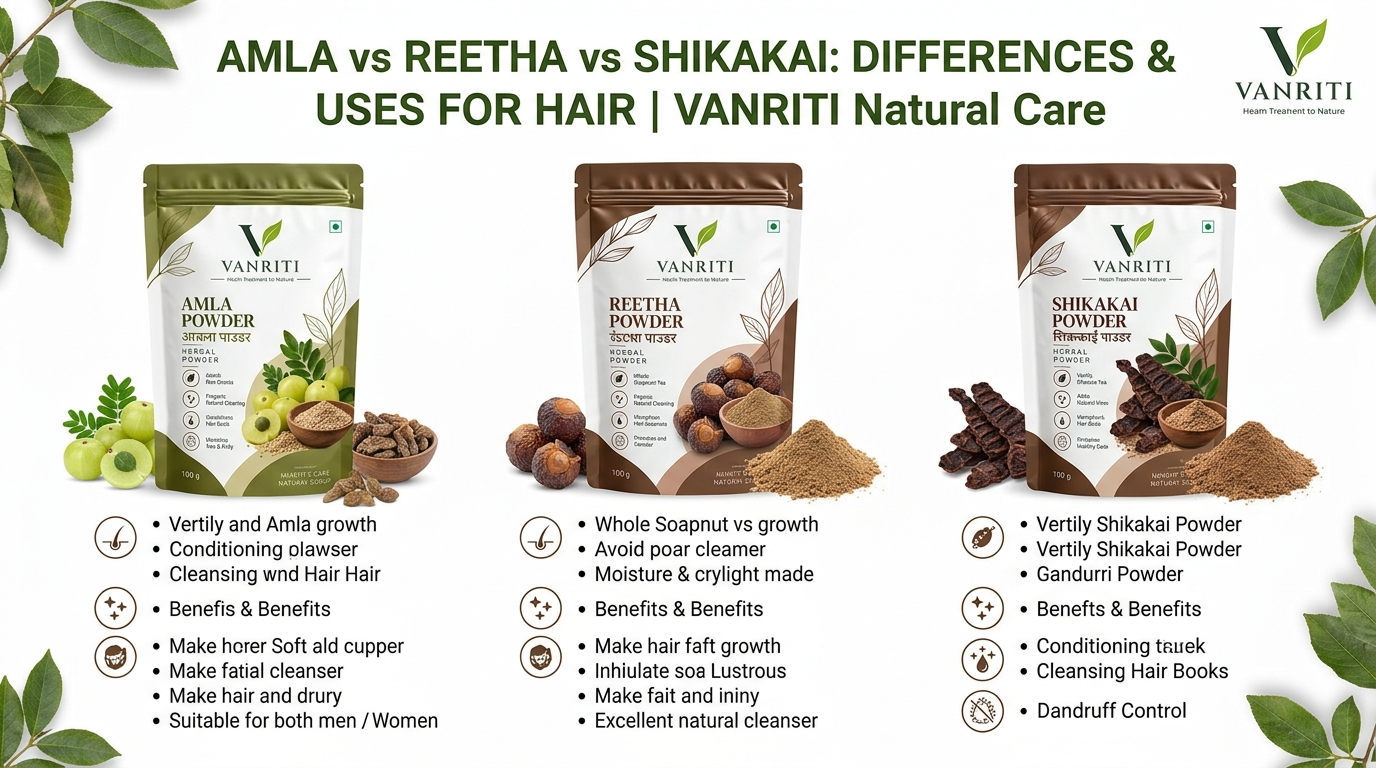
Reetha vs Shikakai: Differences, Uses & Hair Care
Sunday: Review Your Hair-Care Routine
Use the end of the week to consider how your hair and scalp responded.
Ask yourself:
- Did your hair feel clean after washing?
- Did the preparation leave your hair feeling unusually dry?
- Did your scalp become itchy, red or irritated?
- Was the routine easy to maintain?
- Did you introduce too many new products at once?
If a product caused discomfort, stop using it. Keep the routine simple and change only what is necessary.
How to Adjust Your Routine for Different Hair Needs
Your weekly schedule should be flexible. Consider these general guidelines when choosing products.
| Hair or scalp concern | What to consider |
| Hair feels dry | Avoid excessive cleansing and consider a suitable conditioner |
| Hair feels oily quickly | Cleanse according to your needs rather than following a rigid calendar |
| Hair is curly or textured | Focus on gentle handling and suitable conditioning |
| Hair is coloured or chemically treated | Check product suitability and test a small, inconspicuous section first |
| Scalp feels itchy or irritated | Stop potentially irritating products and seek professional advice if symptoms persist |
| Persistent hair shedding | Consult a qualified healthcare professional rather than relying on herbal powders |
These suggestions are general. The right routine depends on your individual hair and scalp.
Should You Mix All the Herbal Powders Together?
You may find recipes that combine amla, bhringraj, reetha, shikakai and hibiscus in one mixture. However, using all five ingredients together is not necessary.
Each powder has different traditional uses, and a combination can make it harder to identify which ingredient caused irritation or dryness.
A more practical approach is to:
- Choose one product for a specific purpose.
- Read its ingredient list and directions.
- Test it before wider use.
- Introduce other products gradually, if needed.
- Stop using any preparation that causes a reaction.
For example, you could explore an amla hair mask separately from a reetha-and-shikakai cleansing preparation rather than combining everything into one paste.
VANRITI Herbal Hair-Care Combo
Safety Tips for Using Herbal Powders Every Week
Natural ingredients can still cause irritation. Follow these precautions:
1. Choose products intended for hair care.
Do not assume that every herbal powder is suitable for every application.
2. Perform a patch test.
Follow the manufacturer's patch-testing instructions. A patch test cannot guarantee that a reaction will never occur.
3. Prepare fresh mixtures.
Mix only the amount needed for one application. Avoid storing leftover water-based pastes.
4. Use clean utensils.
Keep bowls, spoons and preparation surfaces clean.
5. Avoid eye contact.
This is particularly important with reetha-containing cleansing preparations. If a product enters your eyes, rinse promptly with plenty of clean water.
6. Do not overuse hair masks or cleansing powders.
More frequent application does not necessarily mean better results.
7. Stop if irritation occurs.
Discontinue use if you experience burning, itching, redness or swelling.
8. Seek professional advice when needed.
Persistent scalp irritation, severe dandruff or unexplained hair loss may require medical assessment.
For more details, read our safety guide:
How to Use Herbal Powders Safely for Hair and Skin
Common Mistakes to Avoid
When building a weekly herbal hair-care routine, avoid these mistakes:
- Using every herbal powder simply because it is available.
- Washing your hair on a rigid schedule that does not suit your needs.
- Applying a new mask and cleansing preparation for the first time on the same day.
- Leaving a preparation on longer than directed.
- Assuming herbal powders will guarantee hair growth.
- Ignoring dryness, itching or scalp irritation.
- Storing leftover wet mixtures for later use.
- Skipping suitable conditioning when your hair needs it.
A routine should be manageable and comfortable. If it becomes complicated or causes problems, simplify it.
Frequently Asked Questions
1. Can I use herbal powders every day?
Daily use is not necessary for everyone. The suitable frequency depends on the ingredient, product directions and your hair and scalp response. Start conservatively and discontinue use if irritation develops.
2. Which herbal powder is best for a weekly hair-care routine?
There is no single best powder for everyone. Reetha and shikakai are traditionally associated with cleansing, while amla, bhringraj and hibiscus are commonly used in hair-care preparations. Choose according to your intended use and product instructions.
3. Can I use amla and bhringraj together?
They can be combined in some homemade preparations if both products are suitable for that use. Start with a small batch, perform a patch test and follow the directions on both labels.
4. Can I use reetha and shikakai together?
They are traditionally combined in some hair-cleansing preparations. Follow the directions for both products, avoid eye contact and rinse thoroughly.
5. How long should I leave a herbal hair mask on?
Follow the instructions for your specific product. Do not assume that leaving a mask on longer will improve its results, and rinse promptly if discomfort occurs.
6. Can a weekly herbal routine stop hair fall?
No. A herbal hair-care routine cannot guarantee that hair shedding will stop or that new hair will grow. Persistent or sudden hair loss should be assessed by a qualified healthcare professional.
7. Can I use herbal powders on coloured hair?
Suitability varies by product and hair treatment. Check the label and consider testing a small, inconspicuous section first. Ask your hair-care professional if you are unsure.
8. What should I do if my scalp becomes itchy after using a herbal powder?
Stop using the product and rinse it out thoroughly. If irritation persists, worsens or is severe, seek medical advice.
Final Thoughts
A weekly herbal hair-care routine does not need to be complicated. A suitable cleansing method, an optional hair mask and gentle hair handling can form a manageable starting point.
Amla, bhringraj, reetha, shikakai and hibiscus each have traditional uses, but you do not need to use them all at once. Choose products carefully, follow their instructions and pay attention to how your hair and scalp respond.
Explore VANRITI's herbal hair-care range to find powders suited to your personal-care routine.