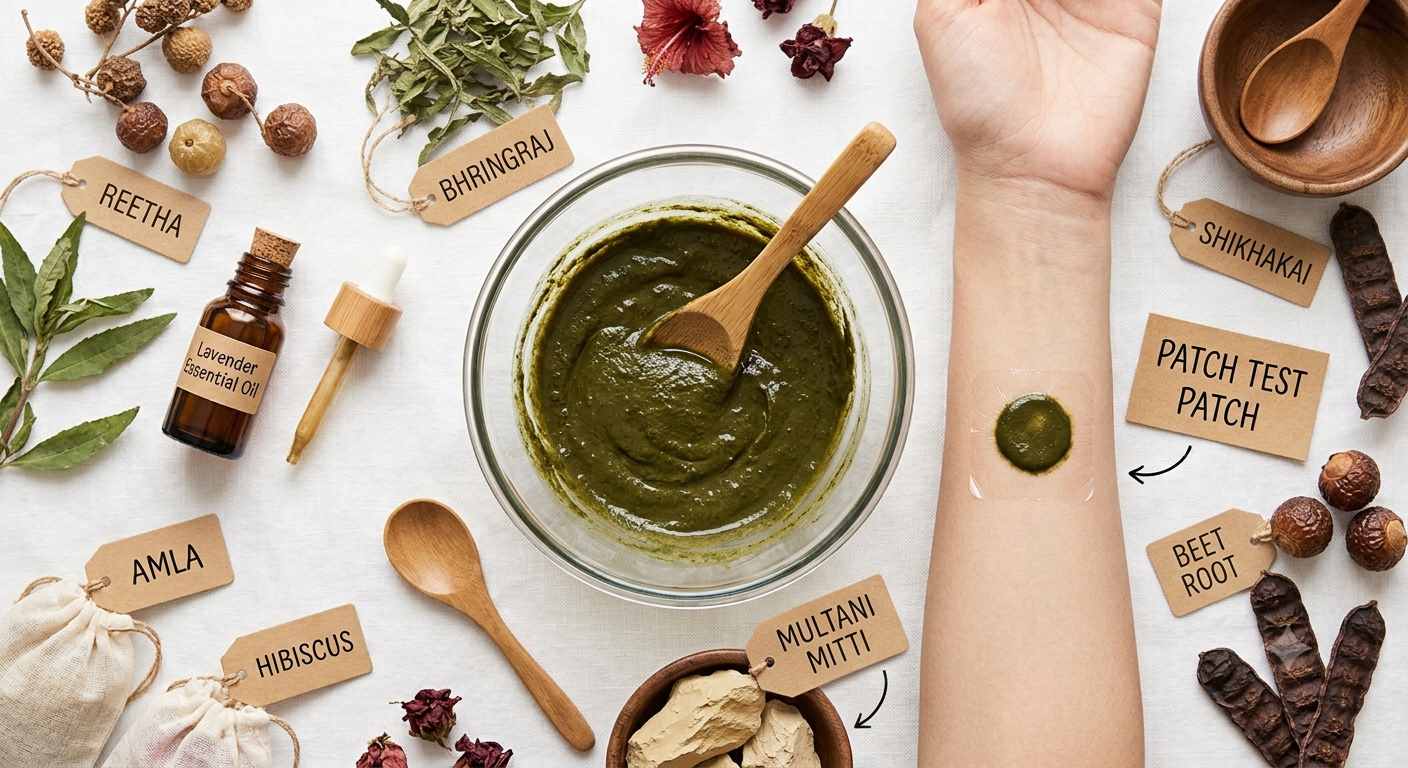
Herbal powders are widely used in traditional Indian hair-care and skin-care routines. Ingredients such as amla, bhringraj, reetha, shikakai, hibiscus, neem and multani mitti are popular choices for different personal-care preparations.
However, natural ingredients still need to be used carefully. Different powders have different properties, and an ingredient suitable for cleansing may not be appropriate for a face pack or conditioning preparation.
Whether you are new to herbal powders or looking to improve your existing routine, understanding how to select, prepare and apply them can help you make more informed choices.
In this guide, we will cover how to use herbal powders for hair and skin, simple preparation methods, important precautions and common mistakes to avoid.
What Are Herbal Powders?
Herbal powders are finely ground plant materials or naturally occurring mineral-based ingredients used for various traditional personal-care purposes.
Depending on the ingredient and its intended use, a powder may be mixed with water to create a paste, used in a hair-cleansing preparation or included in a face pack.
Some commonly used ingredients include:
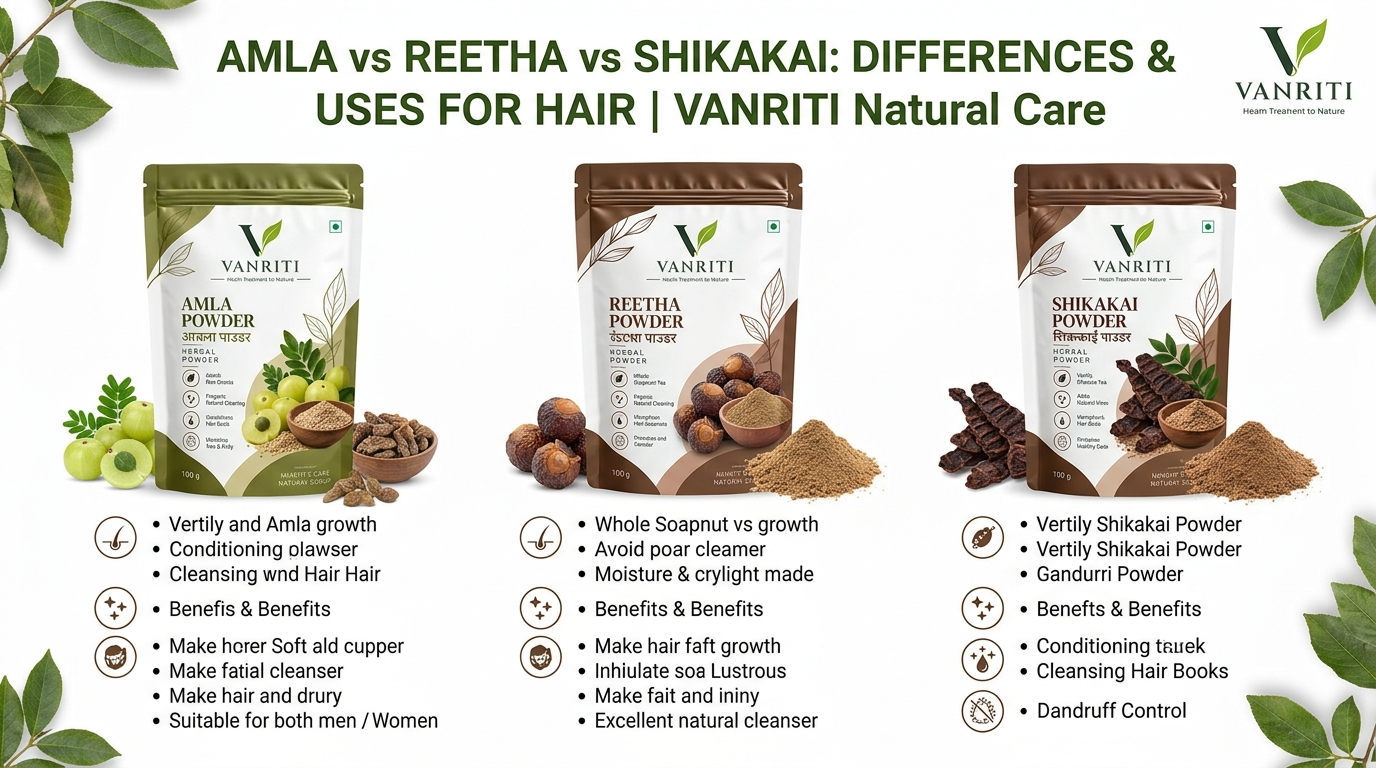
- Amla powder: Traditionally used in hair-care preparations.
- Bhringraj powder: Associated with traditional Ayurvedic hair care.
- Reetha powder: Traditionally used in hair-cleansing preparations.
- Shikakai powder: Commonly used as a traditional hair cleanser.
- Hibiscus powder: Used in traditional hair and beauty routines.
- Neem powder: Used in some traditional skin-care and hair-care preparations.
- Multani mitti: A clay-based ingredient commonly used in face packs.
The important thing to remember is that not every herbal powder is suitable for every purpose. Always check the product label and directions before use.
How to Use Herbal Powders for Hair Care
Herbal powders can be incorporated into a hair-care routine in different ways. The preparation should depend on the ingredient and the product's intended use.
1. Amla Powder for Hair Care
Amla powder is traditionally used in homemade hair-care preparations. It can be mixed with water to form a paste.
How to prepare it:
- Add a small amount of amla powder to a clean bowl.
- Gradually add water and mix until a smooth paste forms.
- Prepare only enough for one application.
- Follow the product directions for application and rinsing.
Amla powder can also be combined with another suitable ingredient, such as bhringraj powder, provided the directions for both products allow this use.
2. Bhringraj Powder for Hair Care
Bhringraj is associated with traditional Ayurvedic hair-care practices and is commonly prepared as a paste.
How to prepare it:
- Place a small amount of bhringraj powder in a clean bowl.
- Add water gradually.
- Mix until the paste is easy to spread.
- Use it according to the product instructions and rinse thoroughly.
If you are trying bhringraj powder for the first time, test a small amount on a small area of skin before wider application.
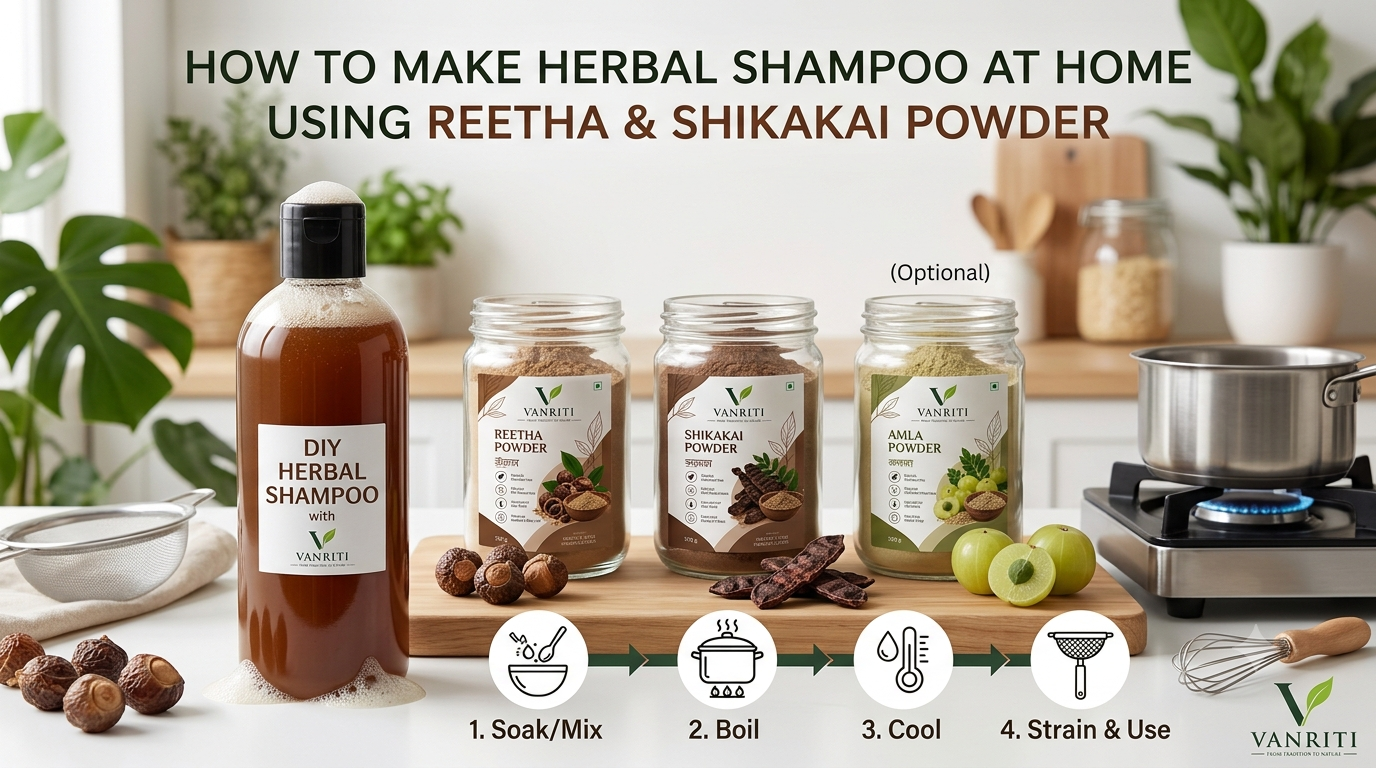
3. Reetha and Shikakai for Hair Cleansing
Reetha and shikakai are traditionally associated with hair cleansing. Reetha contains naturally occurring saponins, which contribute to its cleansing properties.
How to use them:
- Check the directions for each powder.
- Mix the recommended quantities with water if the product instructions permit.
- Prepare a fresh mixture for use.
- Apply only as directed and rinse thoroughly.
Avoid contact with the eyes, particularly when using reetha-containing preparations. If the mixture enters your eyes, rinse immediately with plenty of clean water.
VANRITI Reetha and Shikakai Combo
4. Hibiscus Powder for Hair Care
Hibiscus powder is another ingredient used in traditional hair-care preparations.
How to prepare it:
- Add a small amount of hibiscus powder to a clean bowl.
- Add water slowly while stirring.
- Mix until a smooth paste forms.
- Follow the product's directions for application and rinsing.
Avoid combining several new ingredients at once. Starting with a simple preparation makes it easier to identify an ingredient if irritation occurs.
How to Use Herbal Powders for Skin Care
Some powders are used in traditional face packs. However, facial skin can be sensitive, and an ingredient suitable for hair may not be suitable for the face.
Before using any powder on your face, confirm that it is intended for cosmetic skin use.
1. Multani Mitti Face Pack
Multani mitti is a clay-based ingredient commonly used in face packs. It can absorb oil from the skin, although its effect and suitability vary from person to person.
Ingredients:
- A small amount of cosmetic-grade multani mitti
- Water as needed
How to prepare it:
- Place the multani mitti in a clean bowl.
- Add water gradually and mix into a smooth paste.
- Apply a thin layer to clean skin, avoiding the eyes and lips.
- Follow the product directions and rinse gently.
If your skin feels tight, dry or irritated, discontinue use. People with dry or sensitive skin should be particularly cautious with clay-based masks.
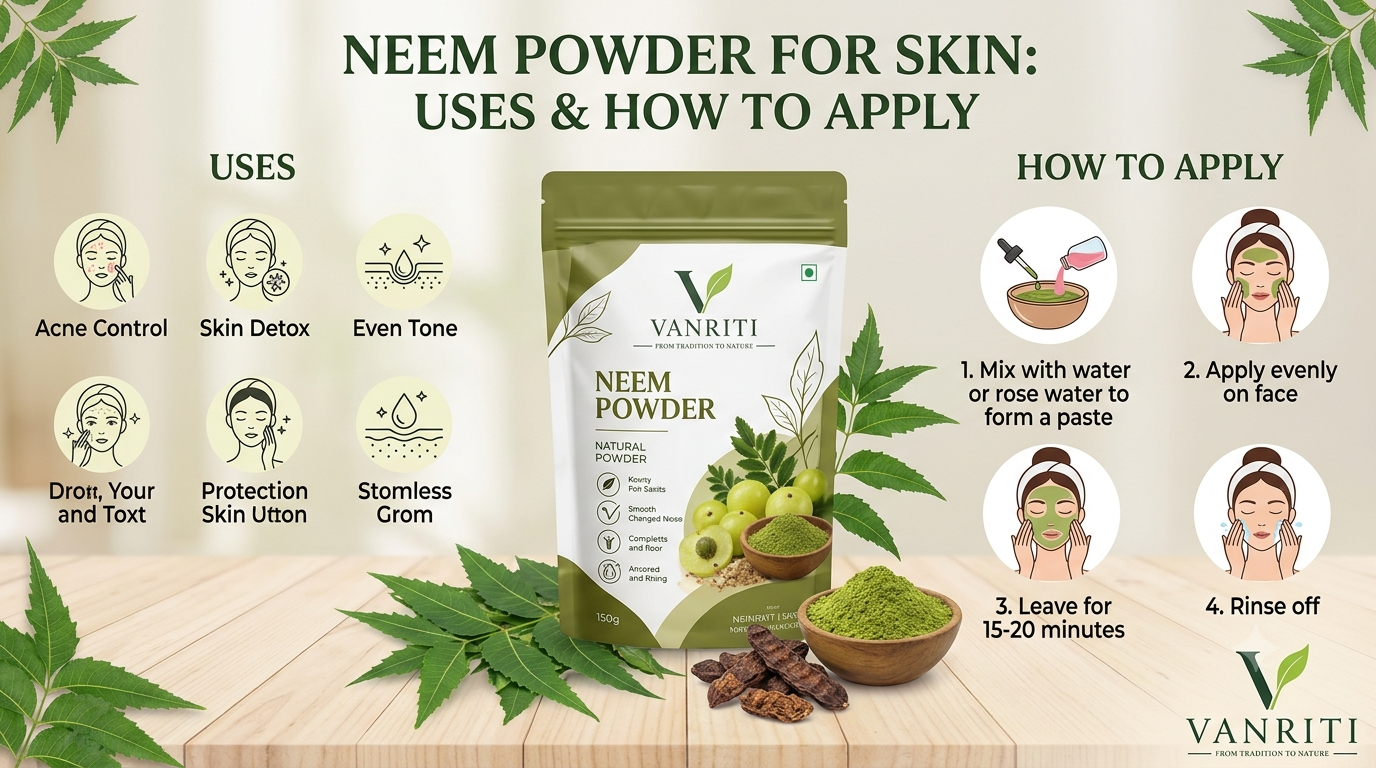
2. Neem Powder Face Pack
Neem powder is used in some traditional skin-care preparations. It should not be assumed to treat acne, infections or other skin conditions.
Ingredients:
- A small amount of neem powder
- Water as needed
How to prepare it:
- Add the powder to a clean bowl.
- Mix with water until a smooth paste forms.
- Test a small amount on a small area of skin first.
- If the product is suitable for facial use and the patch test causes no reaction, apply cautiously according to its directions.
Avoid using neem powder on broken or irritated skin. Stop using it if you experience redness, itching or burning.
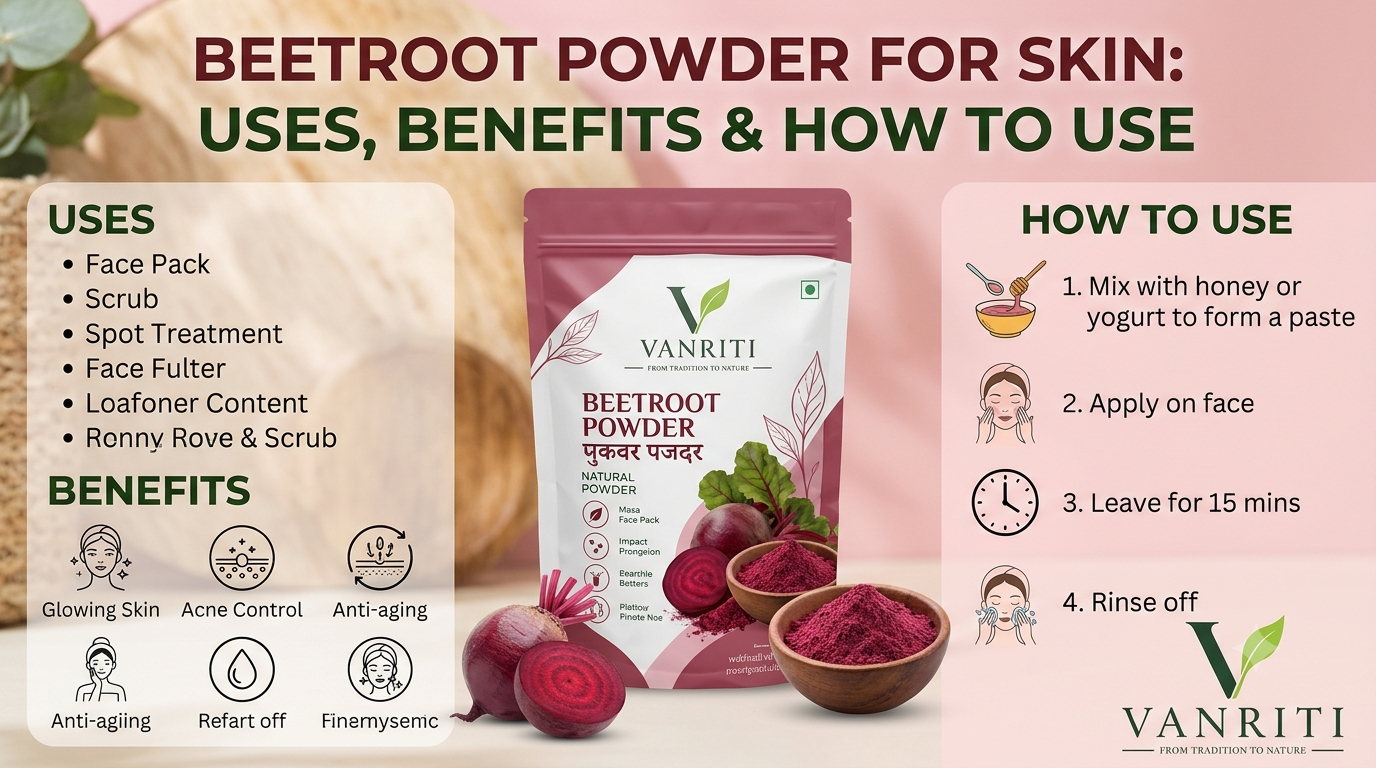
3. Beetroot Powder in a Face Pack
Beetroot powder is used in some homemade beauty preparations. Its suitability depends on the product formulation and individual skin response.
How to prepare it:
- Place a small amount of cosmetic-grade beetroot powder in a clean bowl.
- Add water gradually to form a paste.
- Check the product instructions before applying it to your face.
- Avoid the eyes and lips, and rinse thoroughly.
Beetroot powder may temporarily stain skin, clothing or towels. Test a small area first and avoid making claims that it will lighten skin or treat pigmentation.
How to Choose the Right Herbal Powder
Choosing the right powder starts with identifying what you want to use it for.
| Intended use | Ingredients to explore | Important consideration |
| Traditional hair-care preparations | Amla, bhringraj, hibiscus | Check directions for hair and scalp application |
| Traditional hair cleansing | Reetha, shikakai | Take care to avoid the eyes |
| Clay-based face packs | Multani mitti | May be drying, especially for dry or sensitive skin |
| Traditional skin-care preparations | Neem, beetroot | Check facial-use suitability and test first |
These ingredients are not interchangeable. Choose products intended for your specific use rather than assuming that all plant-based powders work in the same way.
8 Important Safety Tips for Using Herbal Powders
Using herbal powders carefully is just as important as choosing the right ingredients.
1. Check the product label
Read the ingredient list, directions, warnings and intended use. A powder intended for hair cleansing should not automatically be used as a face pack.
2. Perform a patch test
Before trying a new product, test a small amount on a small area of skin and follow the manufacturer's patch-testing instructions. Do not use the product if a reaction develops.
A patch test can help identify some reactions, but it cannot guarantee that irritation or an allergic reaction will not occur later.
3. Use clean utensils
Mix powders in a clean bowl using clean utensils. Avoid introducing water or other contaminants into the original powder container.
4. Prepare small quantities
Mix only the amount required for one application. Water-based homemade mixtures can become contaminated, so avoid storing leftover wet pastes for future use.
5. Avoid the eyes
Reetha and other cleansing preparations can cause eye irritation. Keep all powders and pastes away from the eyes, and rinse immediately with plenty of clean water if contact occurs.
6. Avoid excessive application
Using a product more often or leaving it on longer does not necessarily improve results. Follow the label directions and stop if discomfort develops.
7. Be careful with sensitive skin
If you have sensitive skin or a history of reactions to cosmetic ingredients, introduce new products cautiously. Avoid applying powders to broken, inflamed or irritated skin.
8. Do not rely on herbal powders to treat medical conditions
Herbal powders should not replace professional care for persistent acne, scalp irritation, severe dandruff or unexplained hair loss. Consult a qualified healthcare professional when symptoms persist or worsen.
Common Mistakes to Avoid
When using herbal powders for hair and skin, avoid these common mistakes:
- Mixing too many powders together without checking their suitability.
- Using a hair-care powder on the face without confirming that it is intended for facial use.
- Applying a preparation to broken or irritated skin.
- Leaving face packs on longer than directed.
- Using excessive quantities in the hope of getting faster results.
- Storing leftover wet mixtures.
- Ignoring itching, burning or redness.
- Expecting guaranteed hair growth, acne treatment or skin-lightening results.
A simple routine with suitable products is a more sensible approach than experimenting with many ingredients at once.
How Often Should You Use Herbal Powders?
There is no single schedule that works for every herbal powder or every person.
Frequency depends on the ingredient, product formulation, intended use and your individual response.
- Hair-care preparations: Follow the product directions and adjust if your hair or scalp becomes dry or irritated.
- Hair-cleansing powders: Use according to the product instructions and your cleansing needs.
- Face packs: Start conservatively, especially if your skin is dry or sensitive. Avoid repeated use if your skin becomes tight or uncomfortable.
If a product causes a reaction, stop using it rather than increasing or repeating the application.
Frequently Asked Questions
1. Are herbal powders safe for everyone?
No. Natural ingredients can still cause irritation or allergic reactions. Suitability depends on the ingredient, product formulation and individual sensitivity. Check the label and perform a patch test before first use.
2. Can I mix different herbal powders together?
Some powders can be combined if their intended uses and directions are compatible. However, mixing more ingredients does not guarantee better results. Start with a simple preparation and introduce new ingredients cautiously.
3. Can I use the same herbal powder for hair and skin?
Not necessarily. Some powders are intended for hair care, while others are commonly used in face packs. Always check whether the specific product is suitable for your intended application.
4. How should I store herbal powders?
Keep dry powders in their original, tightly closed packaging in a cool, dry place, following the manufacturer's storage instructions. Use clean, dry utensils when taking powder from the container.
5. Can I store a homemade herbal paste?
It is best to prepare only what you need for one application. Homemade mixtures containing water can become contaminated, so avoid storing leftovers.
6. Can multani mitti be used every day?
Daily use is not necessary for everyone and may cause dryness or irritation. Follow the product directions and reduce or discontinue use if your skin feels uncomfortable.
7. Can herbal powders stop hair fall or guarantee hair growth?
No. Herbal powders cannot guarantee hair growth or prevent hair loss. Persistent or sudden hair shedding should be assessed by a qualified healthcare professional.
8. What should I do if a herbal powder irritates my skin?
Stop using it and gently rinse the affected area. Seek medical advice if the reaction is severe, persists or worsens. If you experience breathing difficulty or swelling of the lips or tongue, seek emergency medical care.
Final Thoughts
Herbal powders can be a useful part of a personal hair-care or skin-care routine when chosen and used appropriately. Amla, bhringraj, reetha, shikakai, hibiscus, neem and multani mitti each have different traditional uses, so understanding their intended purpose is essential.
Start with one suitable product, follow its instructions, prepare fresh mixtures and pay attention to how your skin and hair respond. Remember that natural does not automatically mean irritation-free or suitable for everyone.
Explore the VANRITI range to find herbal powders for your personal-care routine.