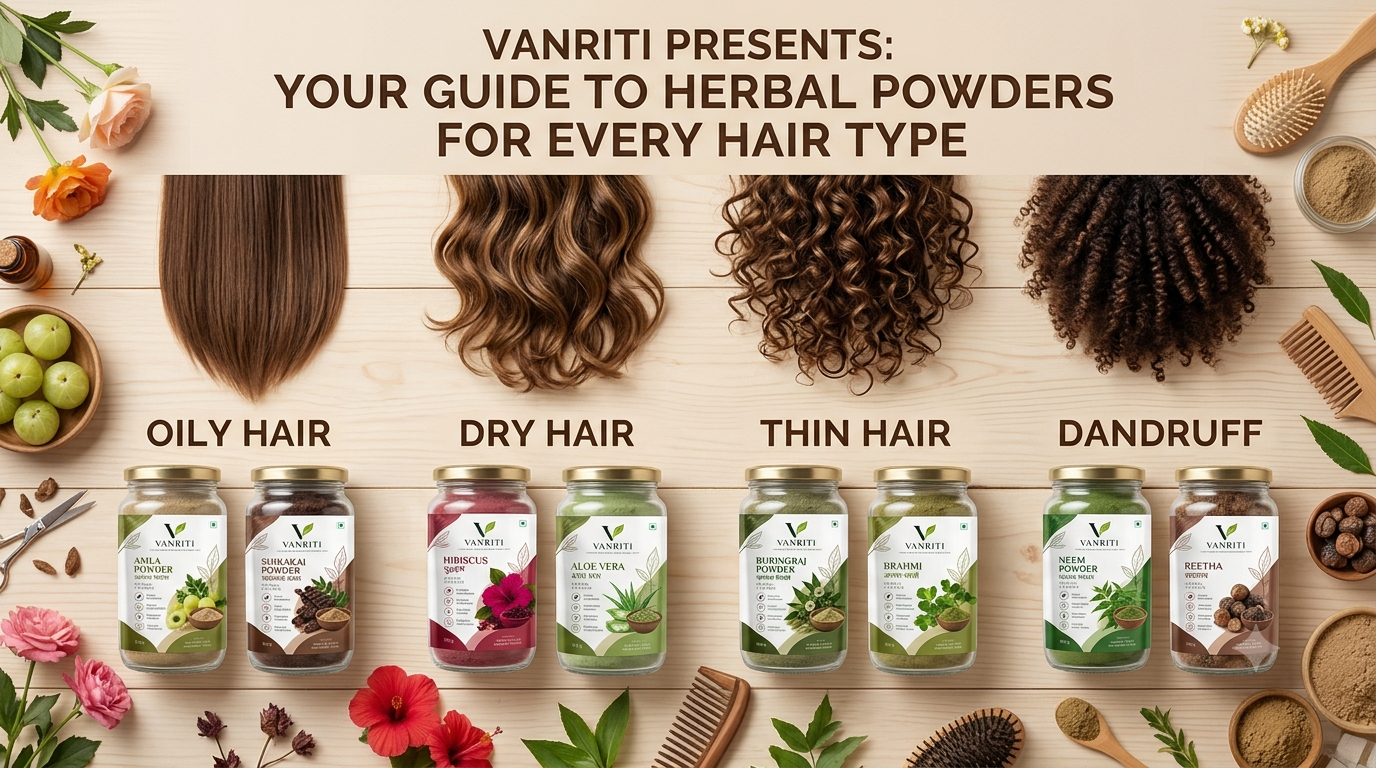
Every person's hair is different. Some people have dry or frizzy hair, while others have an oily scalp, curly hair or hair that becomes tangled easily. Choosing suitable hair-care products starts with understanding these differences and finding a routine that works for your needs.
Herbal powders such as amla, bhringraj, reetha, shikakai and hibiscus are traditionally used in Indian hair-care preparations. They can be mixed with water to create pastes or included in homemade hair masks and cleansing preparations, depending on the product's intended use.
However, not every powder suits every hair type. The right choice depends on your scalp, hair texture, product formulation and how your hair responds.
In this guide, we will explore how to choose herbal powders for different hair types, how to use them responsibly and how to build a simple hair-care routine with VANRITI herbal powders.
1. Understand Your Hair Type Before Choosing Herbal Powders
Before buying a herbal powder, consider your scalp and hair rather than choosing an ingredient simply because it is popular.
Here are some common hair and scalp characteristics to consider:
- Dry hair: Hair may feel rough, lack softness or become tangled easily.
- Oily scalp: The roots may become greasy relatively quickly after washing.
- Normal hair: Hair may feel reasonably manageable without excessive dryness or oiliness.
- Curly or textured hair: Hair may need extra care during cleansing and detangling.
- Fine hair: Heavy or difficult-to-rinse preparations may leave hair feeling weighed down.
- Sensitive scalp: Some products or ingredients may cause itching, redness or discomfort.
You may have more than one of these characteristics. For example, your scalp can be oily while your hair lengths are dry.
The key is to choose a routine based on your actual needs, not just your hair category.
2. Best Herbal Powders to Consider for Different Hair Types
Different powders have different traditional uses. The following guide can help you decide which ingredients to explore.
| Hair type or concern | Powders to consider | Important consideration |
| Dry or frizzy hair | Amla or hibiscus in a suitable hair mask | A cleansing mixture may increase dryness; consider conditioning |
| Oily scalp | Reetha or shikakai in a suitable cleansing preparation | Avoid over-cleansing or irritating the scalp |
| Normal hair | Amla, hibiscus or a suitable cleansing powder | Keep the routine simple and adjust as needed |
| Curly or tangled hair | A suitable mask using amla or hibiscus | Minimise friction and detangle gently |
| Fine hair | A small amount of a suitable, easily rinsed preparation | Avoid heavy mixtures that leave residue |
| Sensitive scalp | Use extra caution with all ingredients | Patch test and discontinue if irritation develops |
These are starting points, not guarantees. Traditional use does not establish that an ingredient will resolve a particular hair concern.
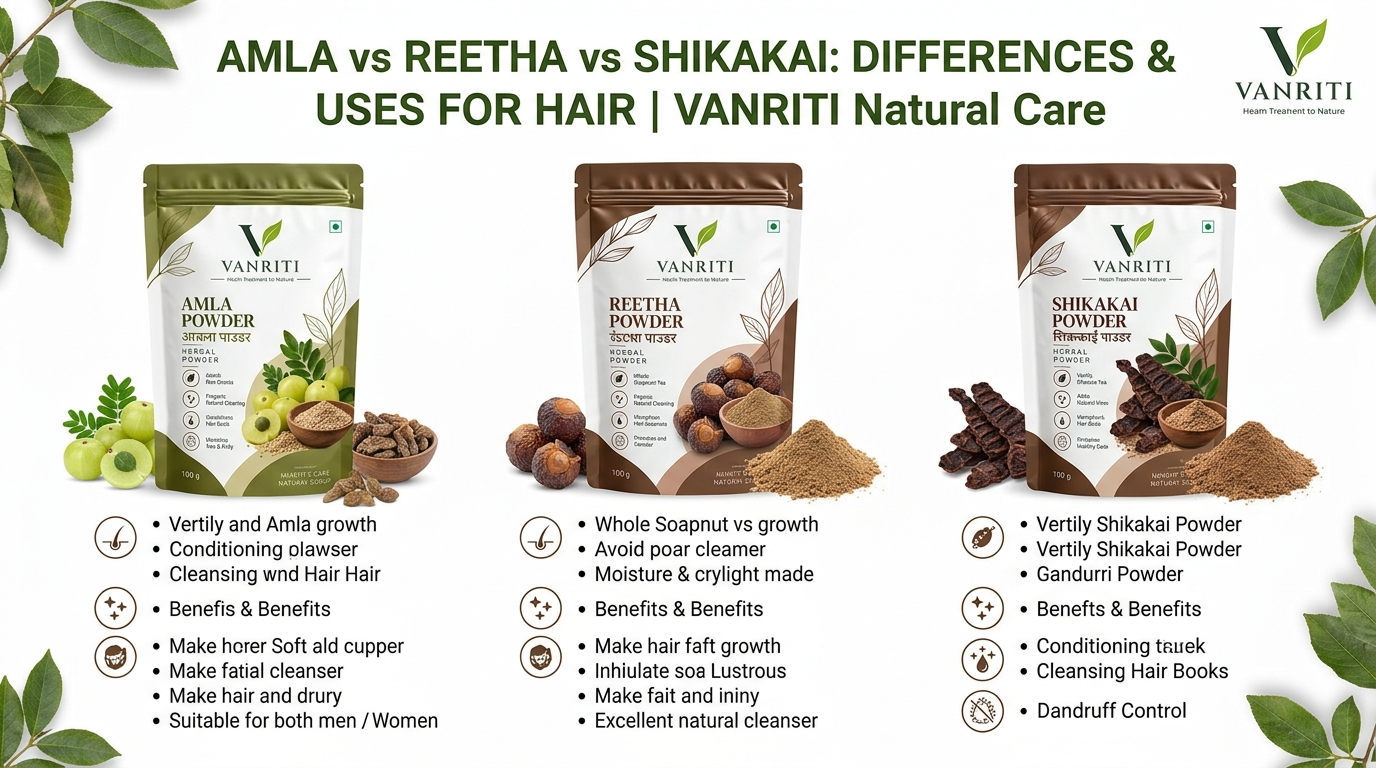
Amla Powder for Hair
Amla is traditionally used in hair masks and herbal hair-care blends. It can be mixed with water to make a paste when the product is intended for that purpose.
If you have dry or frizzy hair, assess how your hair feels after application and rinsing. Follow with a suitable conditioner if needed.
Bhringraj Powder for Hair
Bhringraj is another ingredient used in traditional hair-care preparations. It can be made into a paste according to the manufacturer's directions.
If you are trying bhringraj powder for the first time, introduce it separately rather than combining it with several unfamiliar ingredients.
Reetha Powder for Hair
Reetha is traditionally used in hair-cleansing preparations because it contains naturally occurring saponins.
It may be an option for people exploring alternative cleansing methods, but its suitability depends on the preparation and the individual. Avoid contact with the eyes and rinse thoroughly.
Shikakai Powder for Hair
Shikakai is traditionally used in hair-cleansing preparations, sometimes alongside reetha.
If you have dry lengths or hair that tangles easily, pay attention to how your hair responds. Reduce use or switch to a gentler routine if your hair becomes rough or difficult to manage.
Hibiscus Powder for Hair
Hibiscus powder is commonly used in traditional hair-mask preparations.
You can consider it for an occasional hair mask if the product is intended for cosmetic use. Prepare a small quantity and follow the label instructions.
3. Herbal Hair Care for Dry or Frizzy Hair
Dry or frizzy hair may benefit from a routine that avoids unnecessary cleansing and reduces friction.
What to Consider
- Choose cleansing products according to your scalp's needs.
- Avoid repeatedly using preparations that leave your hair feeling rough.
- Consider a simple amla or hibiscus mask if the product is suitable for that use.
- Use a conditioner that works for your hair.
- Detangle gently, especially when your hair is wet.
- Avoid applying several new ingredients at once.
Simple Amla Hair Mask
Ingredients:
- A small quantity of amla powder
- Water, added gradually
Method:
- Place the powder in a clean bowl.
- Add water gradually to make a smooth paste.
- Apply according to the product instructions.
- Avoid contact with your eyes.
- Rinse thoroughly and assess how your hair feels.
- Use a suitable conditioner if needed.
Amla powder should not be assumed to moisturise or repair every type of dry hair. If the preparation leaves your hair feeling rough, discontinue it or choose another approach.
4. Herbal Hair Care for an Oily Scalp
An oily scalp may need regular cleansing, but using stronger preparations more often is not necessarily better.
Reetha and shikakai are traditional ingredients used in hair-cleansing preparations. If you choose to try them, start with a small quantity and follow the manufacturer's instructions.
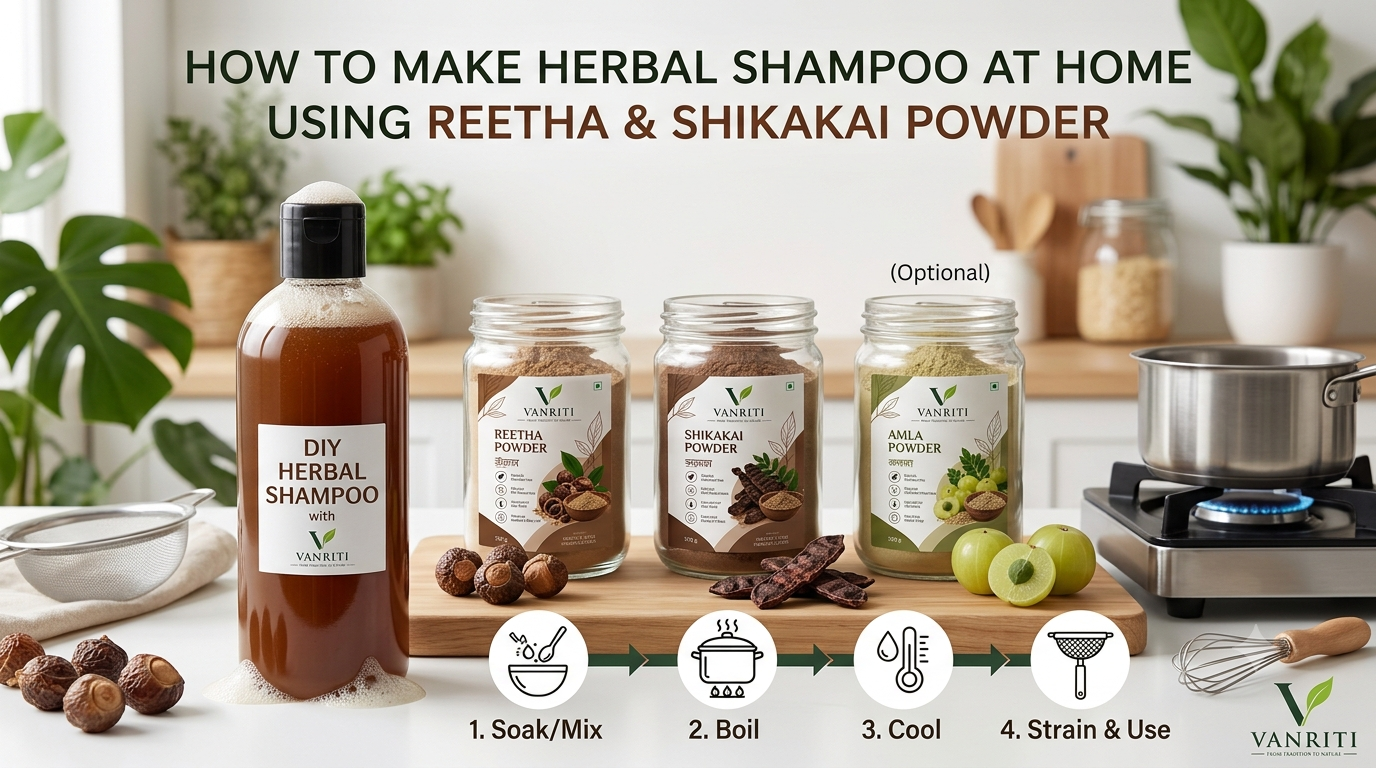
Simple Reetha and Shikakai Preparation
Ingredients:
- Reetha powder
- Shikakai powder
- Water
Method:
- Combine small quantities of the two powders in a clean bowl.
- Add water gradually and mix well.
- Allow the preparation to rest briefly if directed by the product instructions.
- Apply gently to wet hair and scalp.
- Keep it away from your eyes.
- Rinse thoroughly to remove all residue.
Avoid leaving the mixture on for longer than recommended. If it causes irritation, excessive dryness or discomfort, stop using it.
5. Herbal Hair Care for Curly or Tangled Hair
Curly and textured hair may need extra care during cleansing because friction can contribute to tangling and breakage.
Rather than choosing a powder solely because it is labelled herbal, consider how easily the preparation spreads through your hair and rinses out.
Practical Tips
- Divide your hair into manageable sections before applying a mask.
- Avoid vigorous rubbing.
- Do not pull or tug at knots while rinsing.
- Use a conditioner or detangling product that suits your hair.
- Avoid mixtures that leave a gritty residue.
- Introduce one new ingredient at a time.
A simple mask made with a suitable powder and water may be easier to assess than a mixture containing many different ingredients.
Remember that herbal powders do not replace the conditioning and detangling properties of products specifically formulated for those purposes.
6. Herbal Hair Care for Fine or Normal Hair
If your hair is relatively easy to manage, you may not need a complicated routine.
For fine hair, consider whether a preparation rinses out easily and whether it leaves your hair feeling coated or weighed down.
For normal hair, a simple routine may be sufficient:
- Cleanse when needed with a suitable product.
- Use a hair mask occasionally if it suits your needs.
- Condition when appropriate.
- Avoid adding multiple products without a clear reason.
- Adjust the routine if your scalp or hair begins to feel dry, greasy or irritated.
A simple routine is often easier to maintain than one involving numerous ingredients every week.
7. How Often Should You Use Herbal Powders?
There is no universal schedule for every herbal powder or hair type.
Your routine should depend on the product's instructions, your scalp's needs and how your hair responds.
| Routine step | Practical guidance |
| Hair cleansing | Cleanse as needed with a suitable product |
| Herbal hair mask | Use occasionally if the product suits your hair |
| Conditioning | Use a suitable conditioner when needed |
| Introducing a new powder | Start with one ingredient at a time |
| Monitoring results | Look for dryness, irritation, residue or tangling |
| Changing the routine | Adjust based on your experience and the product instructions |
Avoid using every powder in every wash. More ingredients and more frequent applications do not automatically mean better results.
For a more structured schedule, read our weekly hair-care guide.
Weekly Herbal Hair-Care Routine
8. Common Mistakes to Avoid
When choosing herbal powders for different hair types, avoid these common mistakes:
Choosing ingredients based only on popularity: A popular ingredient may not suit your hair or scalp.
Assuming herbal means irritation-free: Natural ingredients can still cause allergic reactions or irritation.
Using cleansing powders too frequently: Some preparations may leave hair dry or tangled.
Mixing too many powders: If a reaction occurs, it may be harder to identify the cause.
Ignoring product directions: Always check the intended use and preparation instructions.
Expecting guaranteed hair growth: Herbal powders should not be treated as guaranteed solutions for hair loss or other medical conditions.
Skipping conditioning: Cleansing powders may not provide the conditioning benefits your hair needs.
Storing wet mixtures for later: Prepare only what you need unless the product is specifically formulated and labelled for storage after mixing.
9. Safety Tips Before Using Herbal Powders
Safety matters regardless of your hair type.
Follow these precautions when trying a new powder:
- Check that the product is intended for cosmetic hair care.
- Read the full ingredient list and usage instructions.
- Perform a patch test as directed before wider use.
- Prepare a small quantity for each application.
- Avoid getting the mixture in your eyes.
- Do not apply the preparation to irritated or broken skin.
- Stop using it if you experience itching, burning, redness or swelling.
- Store the dry powder as instructed by the manufacturer.
A patch test can help identify some reactions, but it cannot guarantee that irritation will never occur.
If you experience persistent scalp symptoms or sudden or substantial hair loss, consult a qualified healthcare professional instead of relying on homemade preparations.
How to Use Herbal Powders Safely
10. How to Choose the Right Herbal Powder Before Buying
Before purchasing a product, check these important details:
- Ingredient information: Confirm which powder or combination the package contains.
- Intended use: Ensure the product is intended for your planned application.
- Packaging: Look for a sealed package without visible damage.
- Batch and date information: Check the relevant product details and shelf life.
- Usage instructions: Choose products with clear preparation and application directions.
- Storage guidance: Make sure you can store the product properly.
- Realistic claims: Be cautious of promises that guarantee hair growth or prevent hair fall.
If you are new to herbal hair care, starting with a single ingredient may help you understand how your hair responds.
Conclusion
Choosing herbal powders for different hair types begins with understanding your scalp, hair texture and personal-care needs. Amla, bhringraj, reetha, shikakai and hibiscus all have traditional uses, but no single ingredient is suitable for everyone.
Start with a simple routine, introduce unfamiliar products cautiously, and monitor how your hair and scalp respond. Use cleansing preparations only as directed, rinse thoroughly and include conditioning when needed.
Explore VANRITI's herbal powder range to find ingredients that fit your hair-care preferences.
Explore VANRITI Hair Care Products
3. Frequently asked questions (FAQs)
1. Which herbal powder is best for dry hair?
There is no single best powder for everyone with dry hair. Some people explore amla or hibiscus in hair masks, but suitability varies. Consider conditioning products and avoid preparations that leave your hair feeling rough.
2. Which herbal powder is suitable for an oily scalp?
Reetha and shikakai are traditionally used in cleansing preparations. If you try them, follow the product instructions and stop if they cause dryness or irritation.
3. Can I use amla, reetha and shikakai together?
These ingredients are traditionally combined in hair-care preparations. Check the intended use of each product, prepare a small quantity and introduce the mixture cautiously.
4. Are herbal powders suitable for curly hair?
Some may be suitable, depending on the formulation and the individual's hair. Curly hair that tangles easily may need gentle application, thorough rinsing and a suitable conditioner.
5. How often should I apply herbal hair masks?
Frequency depends on the product, your hair and your scalp. Follow the manufacturer's directions and reduce use if your hair becomes dry or your scalp becomes irritated.
6. Can herbal powders stop hair fall?
Herbal powders cannot be relied on to prevent or treat hair loss. Persistent or sudden hair loss should be evaluated by a qualified healthcare professional.
7. Can I mix all herbal powders into one hair mask?
It is generally more practical to start with one suitable ingredient at a time. Combining many unfamiliar powders can make it harder to identify which ingredient caused irritation.
8. Should I use conditioner after a herbal hair wash?
You may need conditioner, particularly if your hair becomes dry or tangled after cleansing. Choose a product suitable for your hair type.
9. Are natural hair-care powders safe for sensitive scalps?
Not always. Natural ingredients can cause irritation or allergic reactions. Test new products as directed and stop using them if symptoms develop.
10. How do I choose a herbal powder for my hair type?
Consider your scalp, hair texture, intended use and the product's instructions. Check the ingredients, packaging, shelf life and storage guidance before purchasing.