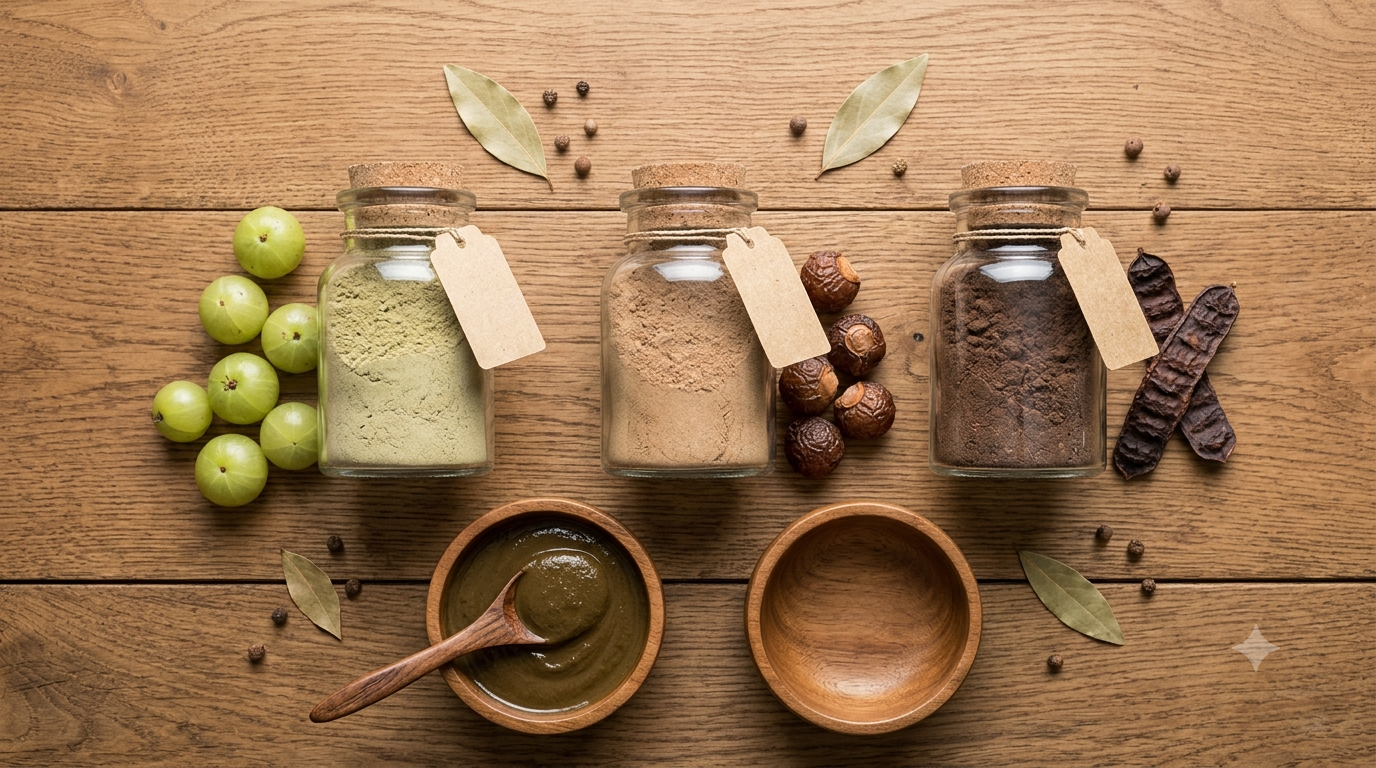
Looking for a simple way to include traditional herbal ingredients in your hair-care routine? Amla, reetha and shikakai are three well-known ingredients used in traditional Indian hair care. They can be prepared together as a homemade hair wash, provided the powders are intended for cosmetic use and are suitable for your scalp.
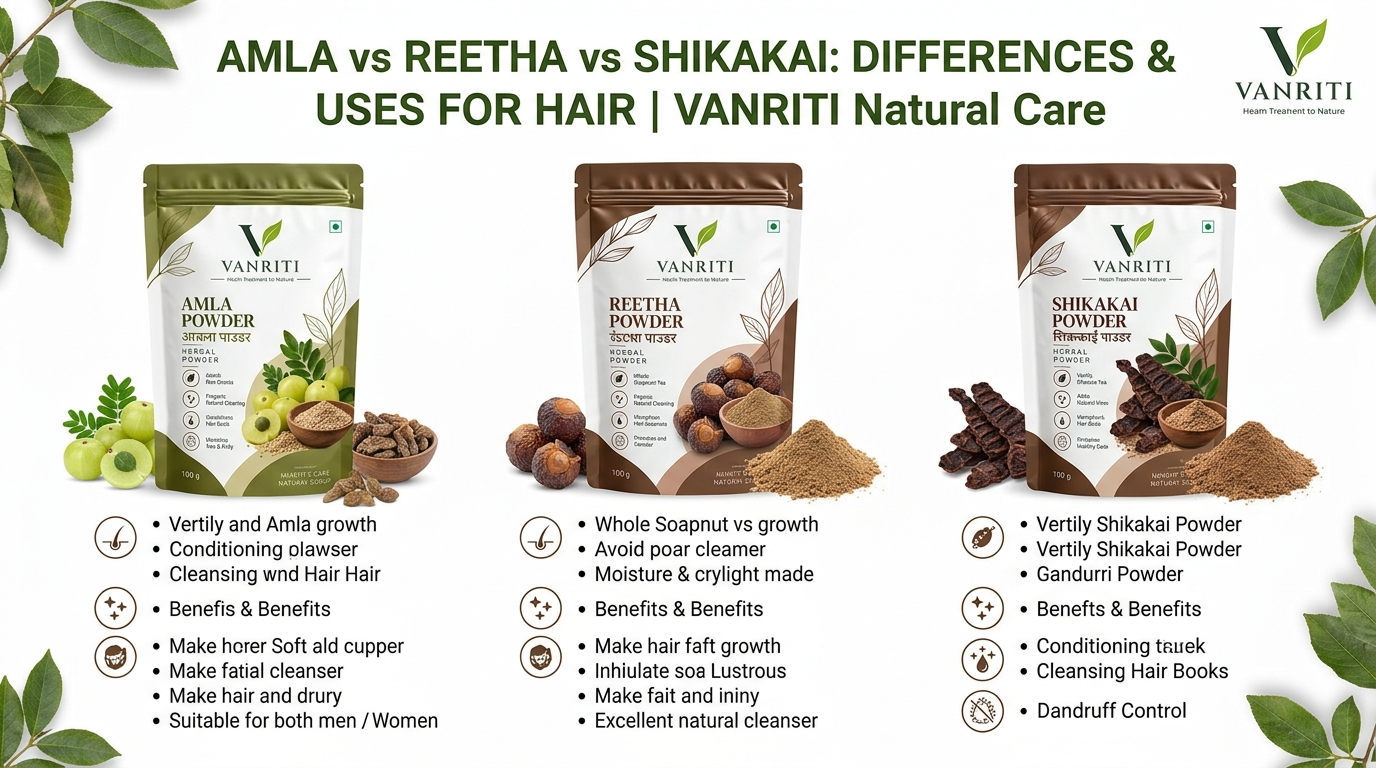
Each ingredient has a different traditional role. Reetha is commonly used in cleansing preparations, shikakai is traditionally used for hair cleansing, and amla is often included in hair-care masks and blends.
In this guide, we will explain how to use amla, reetha and shikakai powder together, how to prepare a simple mixture at home, how to apply it, and what precautions to follow.
1. What Are Amla, Reetha and Shikakai?
Before combining these powders, it helps to understand each ingredient.
Amla Powder
Amla, also known as Indian gooseberry, is traditionally used in hair-care preparations. It is commonly mixed with water to make a paste or combined with other cosmetic ingredients.
Amla powder can be included in a homemade hair-care routine, but individual results vary and it should not be considered a guaranteed treatment for hair loss or premature greying.
Reetha Powder
Reetha, also known as soapnut, is used in traditional hair-cleansing preparations. It contains naturally occurring saponins, which contribute to its cleansing and foaming properties.
Because reetha can irritate the eyes, take care during preparation and rinsing.
Shikakai Powder
Shikakai is a traditional ingredient in hair-cleansing preparations. It is often combined with reetha and other herbal powders.
When using shikakai powder, prepare it according to the product instructions and rinse thoroughly to remove any remaining particles.
2. Why Are These Three Powders Used Together?
Amla, reetha and shikakai are often combined because they serve different roles in traditional hair-care routines.
| Ingredient | Traditional use | What to consider |
| Amla | Hair masks and herbal hair-care blends | Check suitability and follow the product directions |
| Reetha | Hair-cleansing preparations | Avoid eye contact and rinse thoroughly |
| Shikakai | Hair-cleansing preparations | Monitor whether your hair or scalp feels dry or irritated |
Using these ingredients together is one option, not a requirement. You can also use a single powder if that better suits your routine.
Remember that a traditional use does not automatically establish a medical benefit. These ingredients should not be relied on to treat scalp conditions or guarantee hair growth.
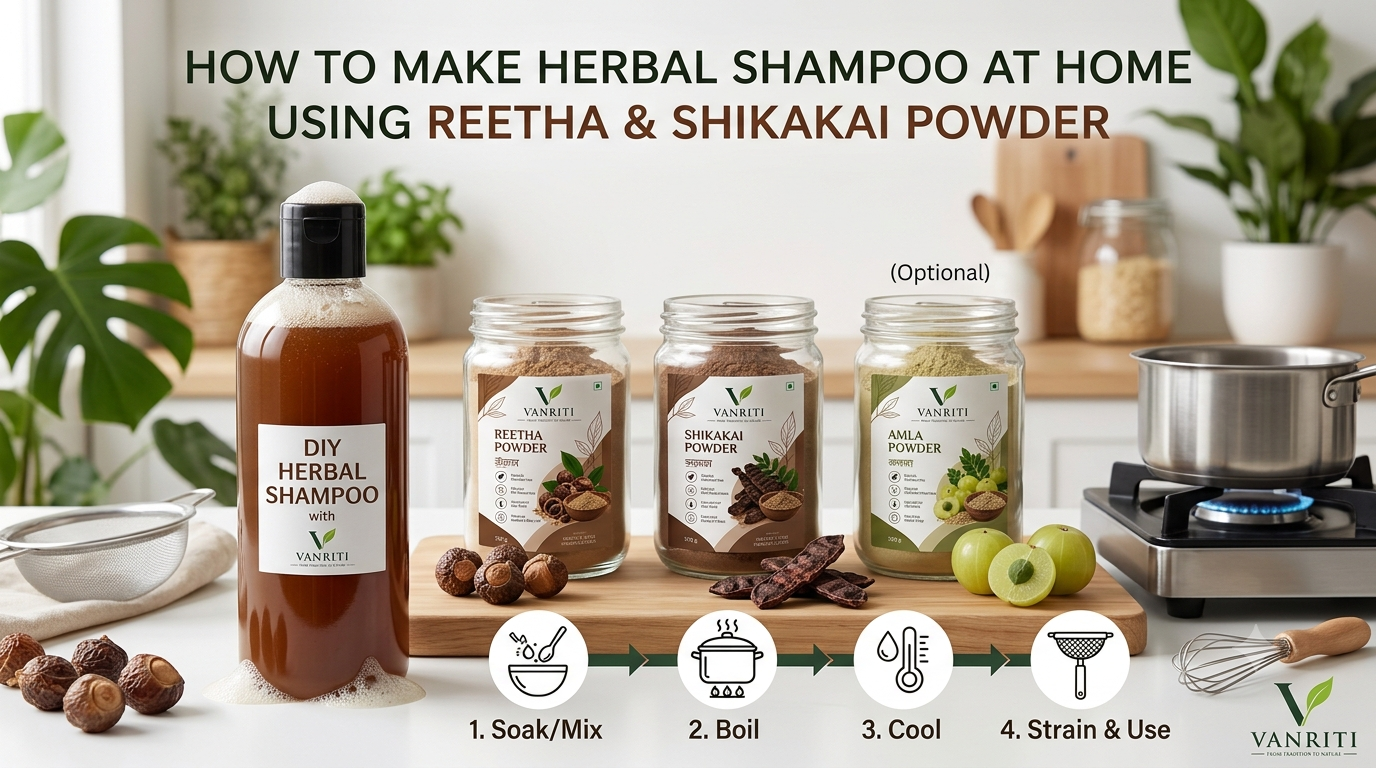
3. How to Make Amla, Reetha and Shikakai Hair Wash at Home
A simple starting point is to prepare a small, fresh batch with equal quantities of all three powders.
Ingredients
- 1 teaspoon amla powder
- 1 teaspoon reetha powder
- 1 teaspoon shikakai powder
- Approximately ½ cup of warm water, or enough to make a workable mixture
These quantities are a starting point for a small batch, not a universal formula. Follow the instructions on your specific products and adjust the amount of water to achieve a consistency that is easy to apply and rinse out.
Preparation Method
Step 1: Choose a clean bowl.
Use a clean, dry bowl and measuring spoon to avoid contaminating the powders.
Step 2: Add the powders.
Measure the three powders into the bowl and mix them together.
Step 3: Add warm water gradually.
Pour in the water little by little while stirring to reduce lumps. The mixture should be easy to distribute through wet hair.
Step 4: Let the mixture rest briefly.
Allow it to stand for around 10–15 minutes if the product instructions permit. Stir again before use.
Step 5: Prepare only what you need.
Use the mixture fresh. Do not store a water-based homemade preparation for later use, as its safety and shelf life have not been established.
If you prefer a less gritty application, follow the manufacturer's instructions for soaking or straining the preparation, where appropriate.
4. How to Apply the Herbal Hair Wash
Follow these steps when using the mixture for the first time.
- Read the product instructions. Confirm that all three powders are suitable for your intended hair-care use.
- Wet your hair thoroughly. This helps distribute the mixture more evenly.
- Apply in small sections. Gently work the preparation onto the scalp and through the hair.
- Massage lightly. Use your fingertips rather than scratching with your nails.
- Keep it away from your eyes. Reetha and shikakai preparations can cause eye irritation.
- Rinse thoroughly. Continue rinsing until the mixture and visible powder residue have been removed.
- Assess how your hair feels. If your hair feels unusually dry, rough or tangled, reconsider the mixture or return to a cleanser and conditioner that work for you.
Do not leave the preparation on longer than directed by the product manufacturer. A longer application does not necessarily produce better results.
5. How Often Should You Use Amla, Reetha and Shikakai?
There is no single frequency that suits everyone. It depends on the formulation, your scalp, your hair texture and how your hair responds.
For a cautious starting routine:
- Try the preparation occasionally rather than using it every day.
- Observe how your hair and scalp feel after each use.
- Reduce use or discontinue it if you notice dryness, irritation or excessive tangling.
- Alternate with your usual shampoo or conditioner if that works better for your hair.
If you have a sensitive scalp, a known plant allergy, or a scalp condition, seek suitable professional advice before introducing new preparations.
6. Is This Herbal Hair Wash Suitable for Every Hair Type?
Not necessarily. Even traditional ingredients may not suit every person.
Oily Scalp
You may be interested in a cleansing preparation, but avoid assuming that a stronger mixture or more frequent washing is better. Monitor your scalp's response.
Dry or Frizzy Hair
Cleansing preparations may leave some hair feeling dry or tangled. Consider using a suitable conditioner and reducing the frequency if needed.
Curly or Textured Hair
Hair that tangles easily may need extra care during application and rinsing. Avoid rough rubbing and detangle gently with a suitable method.
Sensitive Scalp
Introduce new ingredients cautiously. Stop if you experience burning, redness, itching or discomfort.
Colour-Treated or Chemically Treated Hair
Test cautiously and follow the advice of your stylist or the product manufacturer. Homemade herbal mixtures may affect how your hair feels or looks, and their compatibility with colour-treated hair is not guaranteed.
7. Can You Add Hibiscus or Bhringraj Powder?
Some people prefer to use other traditional ingredients in separate hair masks.
Amla and Hibiscus
Amla and hibiscus can be used in a separate hair-mask preparation when both products are intended for that use. Start with a simple mixture rather than adding several unfamiliar ingredients at once.
Amla and Bhringraj
Amla and bhringraj are also used together in traditional hair-care preparations. You can explore a separate mask if the ingredients suit your needs.
Tip: You do not need to combine every available herbal powder in one application. A simple routine is often easier to manage and makes it easier to identify the cause if irritation occurs.
8. Common Mistakes to Avoid
Avoid these mistakes when using herbal powders:
- Using too much powder: Start with a small batch and follow the product instructions.
- Applying an unfamiliar mixture without testing: Test new products as directed before wider use.
- Leaving the preparation on too long: Follow the recommended application time.
- Rinsing inadequately: Leftover particles can make hair feel gritty or rough.
- Getting the mixture in your eyes: Take particular care with reetha-based preparations.
- Mixing too many ingredients at once: This makes it harder to identify which ingredient may have caused a reaction.
- Keeping leftover wet paste: Prepare a fresh batch for each application.
- Expecting guaranteed results: Herbal preparations cannot guarantee hair growth, prevent hair fall or treat scalp disorders.
For more detailed guidance, read our safety article before trying new ingredients.
How to Use Herbal Powders Safely
9. How to Choose Good Herbal Powders
Before buying amla, reetha or shikakai powder, check the following:
- The product is clearly identified.
- The ingredients are listed transparently.
- The intended cosmetic use is stated.
- The packaging is sealed and intact.
- Relevant batch, date and manufacturer information is available.
- The directions and storage instructions are clear.
- The product description avoids unsupported claims.
If you are new to herbal powders, buying one ingredient at a time may make it easier to assess suitability. A combo pack can be convenient when you already know which ingredients you intend to use.
Conclusion
Amla, reetha and shikakai are traditional ingredients that can be combined in a homemade hair-cleansing preparation. The key is to use products intended for cosmetic use, prepare a small fresh batch, apply it gently and rinse thoroughly.
Start slowly, pay attention to how your hair and scalp respond, and adjust your routine accordingly. If a preparation causes irritation or persistent discomfort, stop using it.
Explore VANRITI's herbal powder range to find ingredients that fit your personal-care preferences.
Explore VANRITI Hair Care Products
3. Frequently asked questions (FAQs)
1. Can I mix amla, reetha and shikakai powder together?
Yes, these ingredients are traditionally combined in hair-cleansing preparations. Check each product's instructions and suitability before mixing them.
2. What is a simple starting ratio for the three powders?
Equal quantities are one possible starting point for a small preparation. The ideal consistency and amount depend on your products and hair length, so follow the manufacturer's instructions.
3. How long should I leave the mixture on my hair?
Follow the directions provided with the products. Do not assume that leaving the mixture on longer will improve the result.
4. Can I use this mixture every day?
Daily use is not necessary for everyone and may cause dryness or irritation. Begin cautiously and adjust according to your hair and scalp's response.
5. Will amla, reetha and shikakai make hair grow faster?
There is no guarantee that this combination will increase hair growth. It is best viewed as a traditional personal-care preparation rather than a treatment for hair loss.
6. Can I use the mixture on a sensitive scalp?
Sensitive skin may react to herbal ingredients. Be cautious, follow product directions and discontinue use if irritation develops. If you have a scalp condition, consult a qualified healthcare professional.
7. Can I store the leftover mixture?
It is best to prepare only what you need for one use. Do not store leftover wet paste unless the product has been specifically formulated and labelled for storage after mixing.
8. Can I add hibiscus powder to the mixture?
Hibiscus is used in some traditional hair-care preparations, but adding more ingredients is not always necessary. Consider using it separately first and follow the product directions.
9. Can I use this mixture instead of shampoo?
Some people use traditional herbal cleansing preparations, while others prefer conventional shampoo or alternate between them. Choose a cleansing method that suits your hair and scalp, and switch if you experience dryness or irritation.
10. What should I do if the mixture gets into my eyes?
Rinse immediately with plenty of clean, lukewarm running water. Seek medical advice if irritation, pain or vision changes persist.