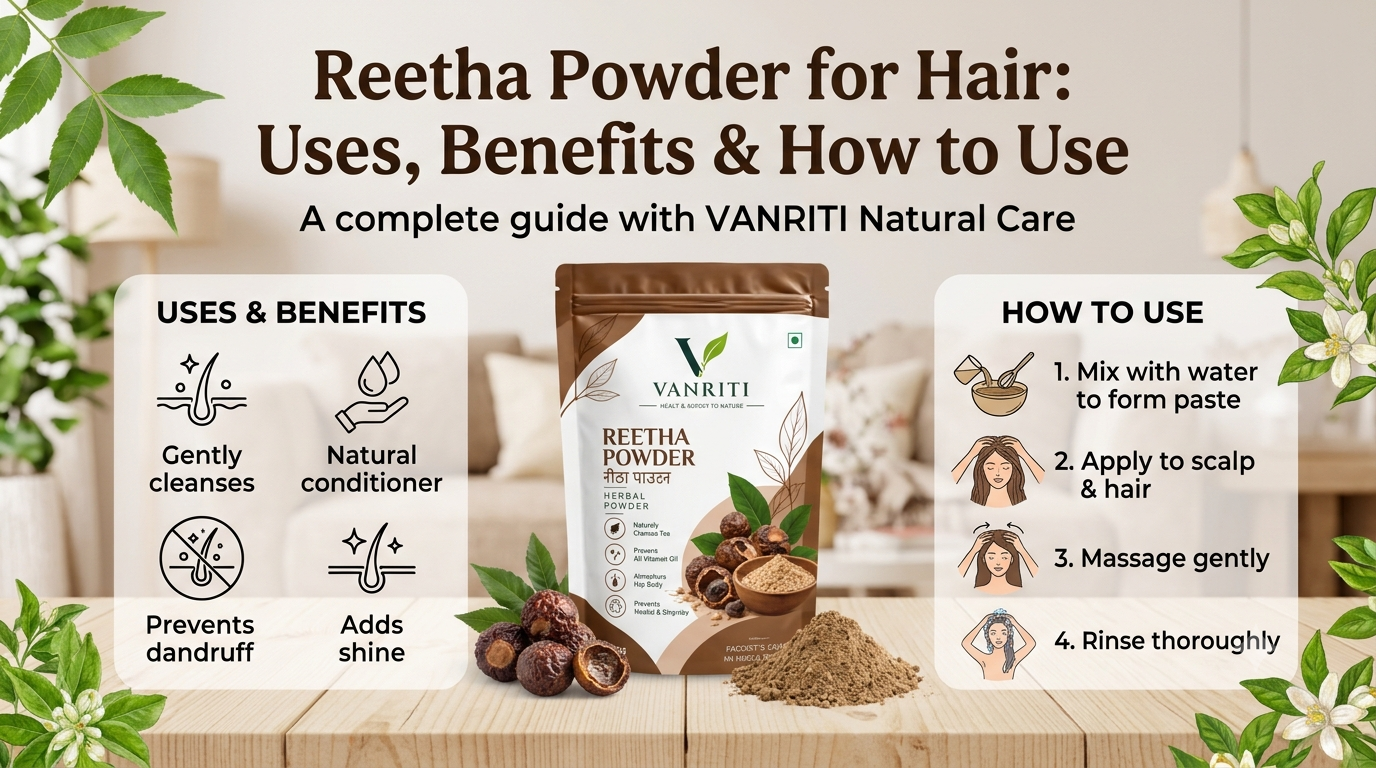
Natural ingredients have been part of traditional hair-care routines for generations. Among these ingredients, reetha is especially popular for its traditional use in hair cleansing. Also known as soapnut, reetha is commonly used to prepare herbal hair-wash mixtures.
Reetha powder is made from dried soapnut material and is valued for its naturally occurring saponins. These plant compounds produce a soapy lather when mixed with water, making reetha a traditional ingredient for cleansing hair.
If you are interested in exploring herbal hair-care ingredients, this guide explains what reetha powder is, how it is traditionally used, how to prepare a simple reetha hair wash, and what precautions to follow.
1. What Is Reetha Powder?
Reetha, also known as soapnut or soapberry, comes from trees belonging to the Sapindus genus. The dried fruit coverings contain natural compounds called saponins.
When reetha is mixed with water, these compounds can produce a mild lather. This is why reetha has traditionally been used for washing hair and cleaning purposes.
Reetha powder is a convenient powdered form that can be mixed with water to prepare a herbal cleansing mixture.
Why is reetha popular in traditional hair care?
- It contains naturally occurring saponins.
- It can produce a lather when mixed with water.
- It is traditionally used as a hair-cleansing ingredient.
- It can be combined with other herbal powders, such as shikakai.
- It offers an alternative ingredient for people interested in traditional herbal cleansing methods.
The exact botanical species and plant material can vary. Check the product label for the ingredient details.
🔗 [ADD LINK: VANRITI Reetha Powder → Link to the relevant product page]
2. Traditional Uses and Benefits of Reetha Powder for Hair
Reetha is mainly known for its traditional cleansing use. Understanding its role can help you decide whether it is suitable for your hair-care routine.
A. Traditionally Used for Hair Cleansing
Reetha contains saponins, which help create a lather when mixed with water. Traditionally, this property has made it a popular ingredient for washing hair.
It can be prepared as a liquid or paste, depending on the product instructions and personal preference.
B. Helps Remove Surface Dirt and Oil
A reetha-based wash can help cleanse the hair by removing surface dirt, oil and product residue. The cleansing experience may differ depending on the concentration, preparation method and individual hair type.
C. A Traditional Herbal Hair-Wash Ingredient
Reetha has a long history of use in traditional hair-care practices. It is often combined with shikakai to prepare herbal cleansing mixtures.
D. Can Be Combined with Other Herbal Powders
Reetha is frequently used alongside ingredients such as:
- Shikakai: Traditionally used in herbal hair-cleansing preparations.
- Amla: Commonly included in traditional hair-care masks and mixtures.
- Hibiscus: Traditionally used in homemade hair masks.
- Bhringraj: Popular in traditional herbal hair-care preparations.
Remember that traditional use does not automatically establish a scientifically proven benefit. Results and suitability can vary from person to person.
3. How to Use Reetha Powder for Hair
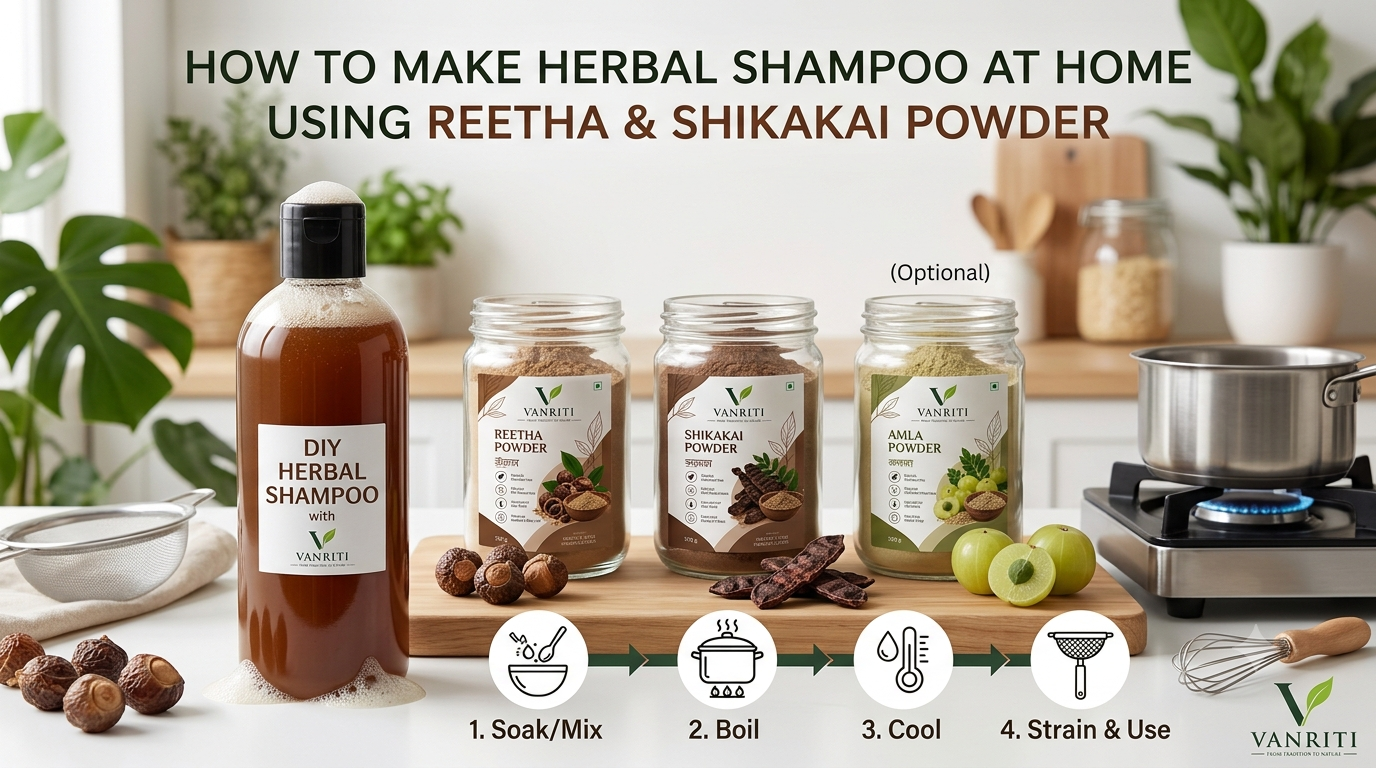
You can prepare a simple reetha hair wash at home using reetha powder and water.
Simple Reetha Hair-Wash Recipe
Ingredients:
- 1–2 tablespoons reetha powder
- Water as required
Adjust the quantity according to your hair length and the instructions on your product label.
Preparation:
- Take reetha powder in a clean bowl.
- Add water gradually.
- Mix until you get a smooth, pourable paste or liquid.
- Allow the mixture to sit briefly if recommended by the product instructions.
- Prepare the mixture fresh before use.
How to Apply:
- Wet your hair thoroughly.
- Apply the reetha mixture gently to your scalp and hair.
- Massage lightly with your fingertips without scratching.
- Rinse thoroughly with clean water.
- Use a suitable conditioner if your hair feels dry after washing.
Important: Reetha may not suit everyone as a regular shampoo replacement. Begin cautiously and observe how your scalp and hair respond.
4. Reetha Powder and Shikakai Powder: Why Are They Used Together?
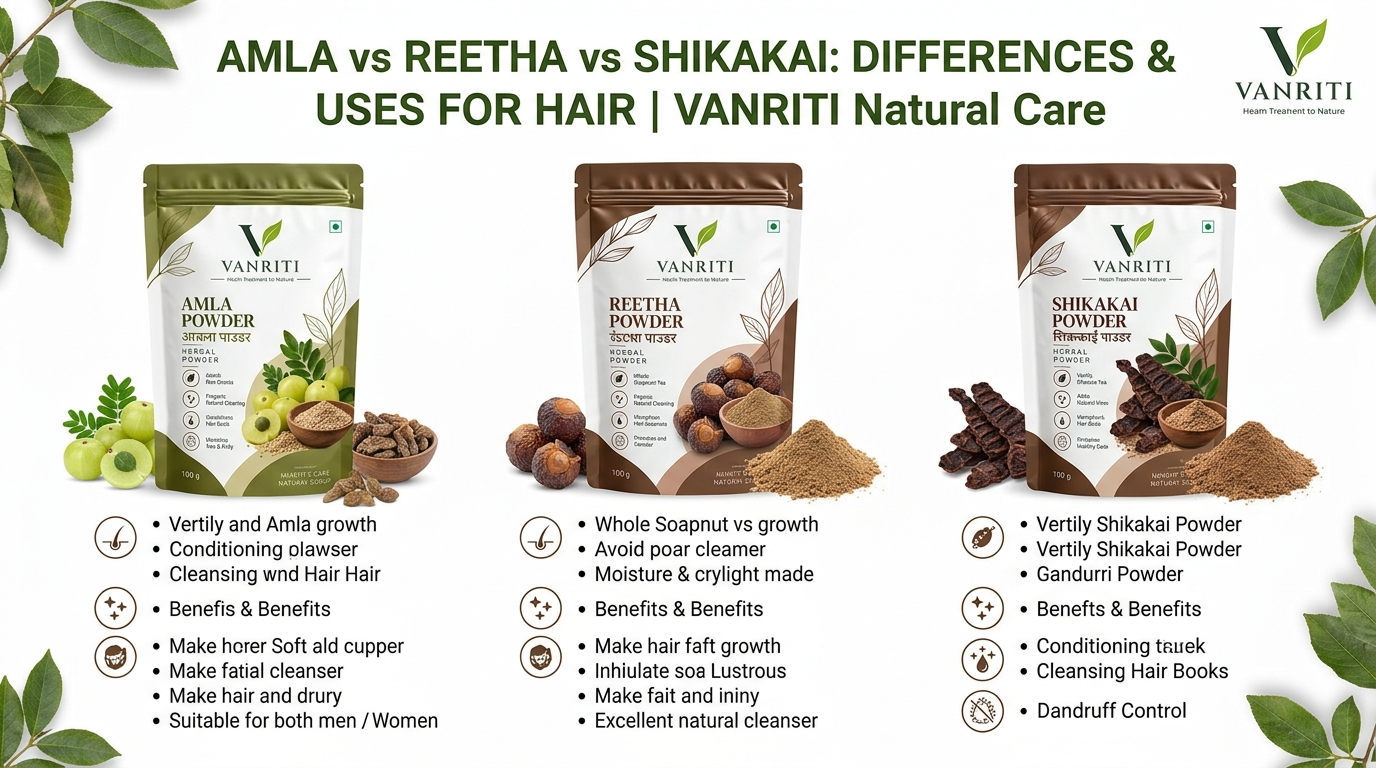
Reetha and shikakai are two well-known ingredients in traditional herbal hair cleansing.
Although they are often used together, they have different characteristics.
| Feature | Reetha Powder | Shikakai Powder |
| Common name | Soapnut | Shikakai |
| Botanical group | Sapindus species | Commonly Acacia concinna |
| Traditional use | Hair cleansing | Herbal hair cleansing |
| Notable property | Naturally occurring saponins | Traditionally used in hair-wash preparations |
| Common preparation | Water-based wash | Water-based paste or wash |
How to Prepare a Reetha and Shikakai Hair Wash
Ingredients:
- 1 tablespoon reetha powder
- 1 tablespoon shikakai powder
- Water as required
Method:
- Combine both powders in a clean bowl.
- Add water gradually and mix well.
- Adjust the consistency to make it easy to apply.
- Apply gently to wet hair and scalp.
- Rinse thoroughly with clean water.
Use a smaller quantity initially to check how your hair responds. The mixture may feel drying or irritating for some people.
🔗 [ADD LINK: VANRITI Shikakai Powder → Link to the relevant product page]
🔗 [ADD LINK: Reetha and Shikakai Combo → Link to the combo product page, if available]
For a more detailed comparison, read our guide:
🔗 [ADD LINK: Reetha vs Shikakai: Differences, Uses and Hair Care → Link to Blog 3]
5. Which Herbal Powders Can Be Combined with Reetha?
Reetha is mainly used for cleansing, while other herbal powders are traditionally included in separate hair masks and preparations.
Here are some ingredients you can explore:
Amla Powder
Amla is traditionally used in hair-care masks and herbal preparations. It can be mixed with water to make a simple paste.
🔗 [ADD LINK: VANRITI Amla Powder → Link to the relevant product page]
Bhringraj Powder
Bhringraj is another popular traditional hair-care ingredient. It is commonly prepared as a water-based hair mask.
🔗 [ADD LINK: VANRITI Bhringraj Powder → Link to the relevant product page]
Hibiscus Powder
Hibiscus powder is traditionally used in homemade hair masks. It can be prepared separately with water and applied according to product instructions.
🔗 [ADD LINK: VANRITI Hibiscus Powder → Link to the relevant product page]
Tip: You do not need to mix every herbal powder together. Start with one ingredient or a simple combination so you can understand how your hair responds.
6. Is Reetha Powder Suitable for Every Hair Type?
Reetha may work differently depending on hair texture, scalp condition and cleansing needs.
| Hair Type | General Consideration |
| Oily hair | A reetha-based wash may help cleanse surface oil and dirt. |
| Dry hair | Use cautiously, as cleansing may leave hair feeling drier. |
| Normal hair | Try a small amount and observe the results. |
| Curly hair | Pay attention to dryness and tangling after washing. |
| Sensitive scalp | Perform a patch test and use extra caution. |
If you have a very dry or sensitive scalp, a traditional cleansing powder may not be the most suitable option for frequent use.
7. How Often Should You Use Reetha Powder?
There is no single frequency that works for everyone.
Your routine should depend on your scalp condition, hair texture, lifestyle and how your hair responds to the preparation.
Consider these tips:
- Start with occasional use rather than daily application.
- Avoid using a concentrated mixture.
- Do not leave the preparation on longer than recommended.
- If your hair feels dry or rough, reduce use or discontinue it.
- Use a suitable conditioner if needed.
- Avoid changing several hair-care products at the same time.
The aim should be comfortable cleansing, not frequent or aggressive washing.
8. Common Mistakes to Avoid When Using Reetha Powder
A few simple precautions can make your experience more comfortable.
1. Using too much powder
A highly concentrated mixture may feel harsh or drying. Start with a small quantity.
2. Applying it near the eyes
Reetha mixtures can irritate the eyes. Keep the preparation away from your eyes and rinse immediately with plenty of clean water if contact occurs.
3. Scrubbing the scalp aggressively
Massage gently with your fingertips. Avoid scratching or rubbing the scalp roughly.
4. Preparing large quantities for future use
Prepare a fresh mixture for each application rather than storing leftover wet paste.
5. Ignoring dryness or irritation
If you notice itching, burning, redness or unusual dryness, stop using the mixture.
6. Assuming natural ingredients are always suitable
Natural ingredients can still cause irritation or allergic reactions. Always test cautiously before regular use.
9. How to Choose Good-Quality Reetha Powder
When purchasing reetha powder, check the product information carefully.
Here are some useful points:
- Ingredient details: Check whether reetha or soapnut is clearly mentioned.
- Botanical information: Look for the species name if provided.
- Intended use: Confirm that the product is intended for cosmetic or hair-care use.
- Packaging: Prefer properly sealed packaging.
- Manufacturing details: Check the batch number, manufacturing date and expiry or best-before information.
- Storage instructions: Follow the manufacturer's recommendations.
- Supplier information: Check the brand and seller details.
- Product claims: Be cautious of exaggerated claims promising guaranteed hair growth or medical results.
Choose a product with clear labelling and suitable usage instructions.
Explore VANRITI herbal hair-care ingredients:
🔗 [ADD LINK: VANRITI Hair Care Collection → Link to the Hair Care category page]
10. Safety Precautions Before Using Reetha Powder
Follow these basic precautions:
- Perform a patch test before first use.
- Avoid applying it to broken, irritated or inflamed skin.
- Keep it away from the eyes.
- Do not inhale loose powder while preparing the mixture.
- Avoid leaving the preparation on longer than recommended.
- Stop using it if irritation, itching or discomfort develops.
- Follow the product label for preparation and storage.
- Keep dry powder sealed and away from moisture.
If you have a persistent scalp problem, consult a qualified healthcare professional rather than relying on herbal powders as treatment.
11. Frequently Asked Questions About Reetha Powder for Hair
Q1. What is reetha powder used for in hair care?
Reetha powder is traditionally used as a hair-cleansing ingredient. Its naturally occurring saponins can produce a lather when mixed with water.
Q2. How do I use reetha powder for hair?
Mix reetha powder with water to prepare a smooth paste or liquid. Apply gently to wet hair, massage lightly and rinse thoroughly.
Q3. Can I use reetha powder and shikakai powder together?
Yes. Both are traditionally used in herbal hair-cleansing preparations. You can combine small quantities with water, apply gently and rinse thoroughly.
Q4. Is reetha powder suitable for dry hair?
It may feel drying for some people. If you have dry hair, start with a small quantity, use it cautiously and discontinue it if your hair feels excessively dry.
Q5. Can I use reetha powder every day?
Daily use may not be suitable for everyone. Start with occasional use and adjust according to your hair and scalp response.
Q6. Does reetha powder help with hair growth?
Reetha is traditionally used for hair cleansing. There is not enough reliable evidence to claim that applying reetha powder directly promotes hair growth.
Q7. Can reetha powder be applied directly to the scalp?
It can be applied as a properly diluted, freshly prepared mixture if the product is intended for hair and scalp use. Avoid applying dry powder directly and do not use it on irritated or broken skin.
Q8. Can I mix reetha powder with amla powder?
They can be combined in a homemade herbal preparation, but their traditional uses differ. Reetha is mainly used for cleansing, while amla is commonly used in hair masks. Start with small quantities and check suitability.
Conclusion
Reetha powder is a popular traditional ingredient for herbal hair cleansing. Its naturally occurring saponins make it useful in water-based hair-wash preparations, and it is often combined with shikakai for traditional cleansing routines.
To use it comfortably, prepare a fresh mixture, apply gently, rinse thoroughly and pay attention to how your hair and scalp respond.
If you are exploring traditional herbal hair care, VANRITI offers a range of ingredients such as reetha, shikakai, amla, bhringraj and hibiscus powders that you can explore for your routine.